Showing posts with label Lady Slipper. Show all posts

Sunday, May 31, 2020

May 31, 2020: The Sounds of Summer

But first this: 
 

Yes, the song birds are now nesting.  I found this small ground nest only because the inhabitant fluttered away as I walked past the nest which was located right beside the trail, perfectly hidden under a branch of a low-bush blueberry; I really had to look to find it.  They look like Robin eggs, but I think more likely this is a nest of either a hermit thrush or a veery.  I frequently hear the thrush in this vicinity so the odds suggest that's what it is.  Maybe I'll learn more as time goes on.

I didn't see the goslings this week, but Mrs. Mallard did come by with her ten chicks in tow.

The waterfowl nest long before the songbirds.


Before I get to the sounds of the week I really must mention the sights because the spring wildflower season is peaking now.  My personal favorite, the painted trillium, has been blooming for over a week but can still be found throughout the Lakes Region.
Painted Trillium


Just popping out this week is a flower everyone loves to see, the pink lady's slipper.  The photo of this beautiful patch was sent to me by Marge Thorpe.
Pink Lady's Slipper, photo by Marge Thorpe.


A smaller, more delicate flower now blooming isn't quite as prominent, but it's worth taking the effort to look at the fine detail in its delicate star-like bloom.  
Easter Starflower

The blossoms on the hobblebush are gone now - leaving behind tiny specks that will grow into fruit this summer - but here's one picture from their peak of beauty.
Hobblebush Viburnum


I've been watching this particular plant as it evolves and will continue to watch as its fruit grows, turns red, and eventually black when fully ripe.

Now to the sounds.  All the animals are loving this warm weather as much as we are and they're singing their praises out loud and clear.  The combination of birds, frogs and toads blend together to create symphonic entertainment each morning and evening.  Add the occasional crash of a beaver tail into the water for some percussion and it's a full Wagner opera.  

Having such a long stretch of warm weather this early in the year means sleeping with the windows open when so many animals are still at a high level of spring activity.  Some of the sounds to be woken up by include turkeys gobbling, owls hooting, tree frogs trilling, large animals crashing through the woods (bears?) and of course, the beaver alert.  I remember sitting in the Marion's cabin 35 years ago when were considering purchasing our land on Lake Wicwas and Mrs. Marion warned us that it was a very noisy neighborhood.  Confused, we asked her what she meant, and she said "The birds!  They wake you every morning!"  That has always stuck with me, especially considering the Marions lived in downtown Boston!

A loud member of  nature's orchestra, sitting in the percussion section, is the woodpecker.  Though they do chirp now and then in the choir, their drumming is most distinctive and great fun to hear.  One morning there were two yellow-bellied sapsuckers out drumming in a round.  One would drum first, then the second would answer.  I couldn't find the musicians, but I sure heard them.


This behavior is used to define their territory.  I learned from UNH biologist Matt Tarr that spring bird singing is primarily to define territory - two male birds of the same species will wake up in the morning and immediately start singing to say "I'm still here".  As long as each bird stays on its side of the agreed-to dividing line everything is fine.  But cross that line, and trouble ensues.  Since woodpeckers don't have a song to sing - only their short calls - they find a resonant object on which to drum to make their presence known, usually a dead tree or branch, and the louder and greater its resonance, the larger a territory the sound can cover.  

Regarding sights under water, the crystal clear lake water is about to change.
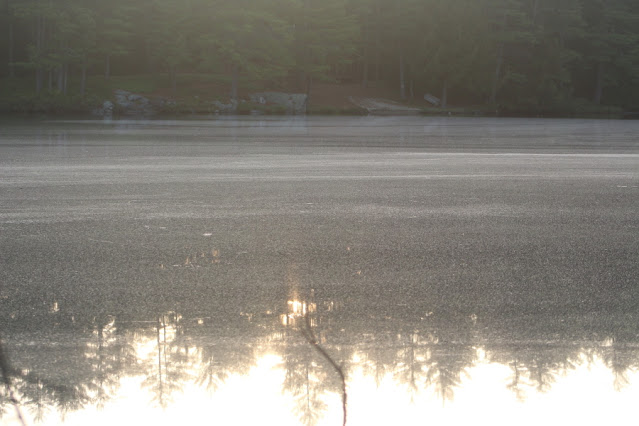
Pollen covers the surface of Lake Wicwas


All that pollen in the air has now found its way to the ground.  Add to that the multitude of microscopic life that will start to grow in the lakes, as well as some churning up by animals and humans, and the visibility will be much reduced from its early spring clarity.  But all the trees aren't quite done:  the white pine is just starting to release its dose.  Pines produce the thick green pollen that is so visible on surfaces, but thankfully, due to the large size of the pollen particles it isn't an allergy nuisance for most people.

With all the pollen out of the atmosphere there were some spectacular summer days on the lakes this week.

Now that's something to sing about!

Sunday, May 31, 2015

May 31, 2015

Oh, the first hot summer nights of the year!  Those nights when the windows stay open and the music of the night fills the house.  Andrew Lloyd-Webber and Sarah Brightman portray it well:

Slowly, gently, night unfurls its splendor
Grasp it, sense it, tremulous and tender 
(Click to listen)    

Add the scent of summer rain wafting in the open windows from an evening thunderstorm and the light of a half-moon shining through open blinds, and it is enchanting.


The performance begins well before sunset when the Tree Frog sings the prelude;  one soloist starts, and within seconds, dozens (maybe hundreds) of frog calls are resonating across the lake.

By the time darkness sets in the full complement of voices has joined the fray.  The long, loud call of the American Toad is distinctive as it carries over great distances.  Later at night the Bull Frog adds its resounding bass line.  (Hint - each of the above are links to their respective call - if you click them all at once you'll get an idea of what it sounds like on a hot summer night!)

On top of all this amphibious racket, the hollow call of the loon can be heard lofting from unknown stations on the lake.  I wonder if they have established a nest at this point.  Sometimes the Barred Owl joins into the chorus, but it was absent this week;  perhaps is it on tour, serenading another audience around the lake.

When the sun rose the next morning and sent the nocturnal animals to bed, plenty of daytime life became apparent around the lake, including a couple of large birds.  A female merganser has been on the lake much later than usual;  one day it decided our dock was the perfect resting place.

 After a nap and a yawn,

it was on its way.

On a warm summer afternoon, looking for a cooler spot, I took a run along the Red Trail that passes behind Crockett's Ledge west of Lake Wicwas, and saw that the Meredith Conservation Committee has been working to ensure the trails are kept in good condition, and that soil erosion will be controlled - they had installed several water-bars along the trail.
Erosion control on the Red Trail

These were made on-site using Cedar trees harvested right in the area;  they help prevent water from rushing straight down the trail, washing the path out and sending soil and silt into the lake.  A great thank-you to all those who work so hard so that we can enjoy the wonderful natural areas they protect, resplendent with natural beauty:

Lady Slippers along the trail approaching the White Mountain Ledge

As of today, the summer weather has taken a vacation, but it will return soon enough, bringing more nocturnal entertainment.  Maybe next time I'll hear the howl of coyotes in the night.
The coyotes are losing their warm winter coats


Listen to the music of the night

Sunday, June 8, 2014

June 8, 2014

I was awakened this morning by the sharp call of an Osprey from  the open window.  A few minutes later I heard the explosion of water that is distinctive to an osprey crashing into the lake to catch a fish.  Osprey make a striking sight and sound, as they actually plunge under the water, talons first, to catch a submerged fish, unlike an eagle which is more likely to glide over the water and extract its prey with just its claws getting wet.  That sound brought me to the window, where I saw two osprey circling, one with a small fish in its grasp;  it landed on an oak with a large dead branch hanging over the lake - the osprey equivalent on breakfast on the deck!  I didn't get a picture, but here's one from Lake Wicwas in 2012.

Those poor fish don't seem to have much of a chance against those weapons!

I was busy last weekend with concerts, and a lot has changed in two weeks.  Perhaps the greatest transformation took place in the Robins nest, where four blue eggs turned into three little chicks. 

June 5
This picture was taken on June 5th, 18 days after the first egg was laid (May 18 post)  It looks like two of the chicks are several days older than the littlest one, which still has its eyes closed.  The next morning, however, the little one was gone. 

June 6
Perhaps it wasn't viable, or perhaps mother decided it couldn't support three chicks.  Either way - nature can be cruel.  Over the next two days the remaining chicks grew quickly, with distinct feathers appearing by today. 

June 7

June 8
Mother has been very busy collecting ants and other insects to keep them nourished.

A couple of less dramatic changes occurred in the woods, with the Black Cherry blossoms converting into tiny green cherries.  
Black Cherry

In a couple of short months these will be attracting Black Bears.

The bunch berries also came into bloom - red berries will follow next.
Bunchberry

One thing that didn't change very much is the status of the Lady Slipper - this orchid has a long bloom period, and can still be found in many places - this one is blooming right beside the Yellow Trail, perhaps half a mile from the trail head in the Hamlin/Eames/Smyth conservation area.
Lady Slippers
Perhaps you have seen it also!


Sunday, May 26, 2013

May 26, 2013

A rather miserable Memorial Day Weekend at Lake Wicwas.  Cold, windy, rainy - there was even a little snow in the air last night, as the temperature hovered only a few degrees above freezing.  It was a little better today with some sun, but still cold and windy;  let's hope for better tomorrow.  With all the rain the past few days, the lake level rose a full twelve inches, from two inches below full, to ten inches above!  Let's hope things settle down so the loons can find a safe nesting site.

There are several more wild flowers blooming around the lake now, including Bluebead Lilly, Star Flower, and Lady Slippers. 
Bluebead Lilly
Eastern Starflower
Lady Slipper

I found some Striped Maple blooming also, up on the trail to Arbutus Hill Pond - a rather unusual flower on an interesting tree.

Striped Maple

The new animals for 2013 have started to arrive!  The first I've seen are the geese, which are as prolific as ever.  These two families were scouting around Oakland Cemetary on Saturday.


And young fox might be next.  I came across a pair of Red Fox in a meadow today.  When they saw me, one loped off slowly into the woods, but the other one sat motionless in the field.  Perhaps one was a decoy to lure me away from the den, while the other remained to protect the kits (which if there were any, I didn't see).  The sentry watched me for a long time, perfectly motionless.  After a while it started to rotate its ears like radar, with bits of black flashing from the back of its ears, but that was all that moved - maybe its tail twitched once or twice.  Keep an eye out for fox kits around the lake - they should have been born by now.  And maybe more fox will help keep the goose population in check - those little fluff-ball chicks would be easy prey for a fox!

We had another renowned fisherman come to pay tribute to Chuck Maul.  A cormorant perched on a fallen tree right in front of Chuck's house - a tree that Chuck had marked with a red buoy to warn others of the hazard.
Cormorant


We took another walk up to Meredith Center yesterday - the landscaping around the Grange looks good!  The door to the Grange was open, so we poked our noses in the door and met two of the people who have been putting in tremendous effort to restore the property.  They gave a us a great tour of the building and all the work they've done:  beautiful stone fireplace, freshly varnished original wood floor, office with the original ticket window, upgraded bathroom, and lots of historical items.  They even have the horse watering trough running with a fountain in it!
Fountain at Meredith Center

Who remembers weekly trips to Meredith Center to collect drinking water from the well years ago?

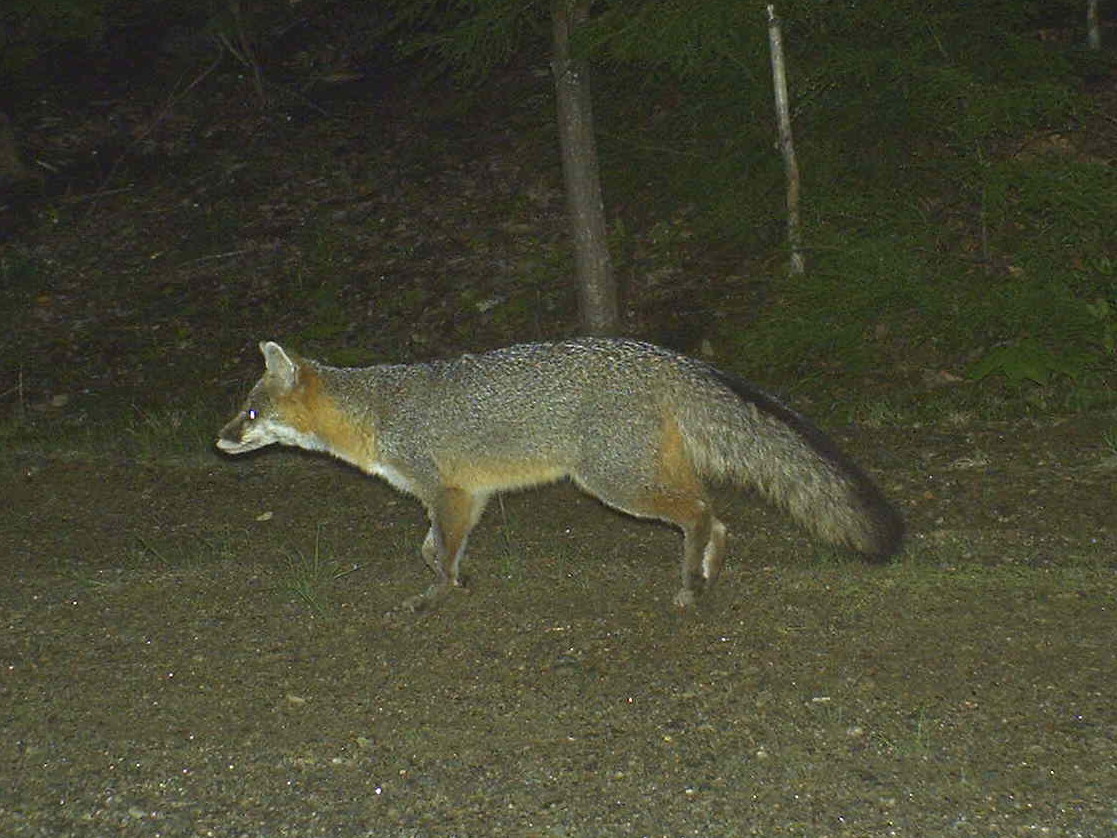
I put out my trail camera to see who is visiting these days, and found the usual characters:  Red and Gray Fox - plus Squirrels, Geese, etc, but no Deer.

Gray Fox
The new laptop has a card reader in, so I looked at the pictures there rather than in my camera, and decided to go back through old pictures to clean out any useless images.  In the process, I found that my camera wasn't reading all of the pictures that had been taken - no obvious reason, but there were several the camera won't read, but the laptop will.  And going through them all, I discovered that, way back in 2010, I had captured a photograph of a Bobcat!  A picture I had never seen!
Bobcat - November 1, 2010

I have seen several tracks that I was nearly certain a bobcat had left in the snow, but never had 100 percent confidence until now, as the Bobcat is one the most secretive animals in the forest.  This is the first definite evidence I have had of bobcat at Lake Wicwas in 40 years!  And to think I almost missed it.  It is another example of the incredibly diverse ecosystem that surrounds our lake.  Those of you who have helped to protect this sanctuary should be proud of what you have realized.  It takes a lot of protected land to sustain animals such as Moose, River Otter, and Bobcat.

Monday, May 28, 2012

May 28, 2012

Lake Wicwas enjoyed a fabulous Memorial Day weekend - it's so hard to believe it's only May with the kind of weather we've had these past two weeks.  There was a bit of wind, but in the calm moments the pollen is collecting and starting to clump up.  I think we still have several weeks of tree pollen to go.

One never knows when an interesting bit of nature will just walk by.  I was out working in the yard on Saturday when this Yellow Spotted Salamander crawled right by me on the walk way.  These amphibians are usually pretty secretive, and this was in the middle of the afternoon, so I don't know what he was up to.  The Yellow Spotted  is one of the largest salamanders; this one was about six inches long.
Yellow Spotted Salamander

At the other end of the spectrum of visibility is the Red Squirrel.  They are acting especially territorial right now, chasing each other all around in the dry leaves and up and down the trees.  They don't seem to have any fear and will stare you down if you're near "their" tree.

The Lady Slippers are now joining the wildflower collection, though this pair seems a  little pale.
Lady Slipper

Linda's mother's day flowers were attracting the Tiger Swallow Tails which have been quite abundant this week.

The black stripes and blue dots show this is a male of the species.
Tiger Swallow Tail

Dragon flies have been out for quite a while, but are now getting very numerous.  There are a few damsel flies emerging as well.  This one must have just come out of its larval stage, as it has almost no color yet.

Humming birds are also numerous at this point.  Even though there are lots of fresh flowers around, they still seem to favor the easy meal from the bird feeder!


Monday, May 30, 2011

May 30, 2011


The unofficial start of the Lake Wicwas summer vacation season began with a bang on Memorial Day weekend, with some fabulous summer weather.  The thermometer read 90.0 degrees on Saturday.  There were lots of boats out on the lake, and people were swimming in the cool, but not frigid water.  The resident Lake Wicwas windsurfer was out already, enjoying the warm breezy weather!


The white pines have started to dump their load of pollen into the lake.  It's not as bad as some years, but there's still a moderate layer of yellow-green on the surface of the lake, and a ring of yellow showing the high water mark of a few days ago.  The water has dropped at least six inches in the past four days, and it's still going down, as the dam is set perhaps five inches below full level. 

Yesterday in one of the marshes I came across the largest snapping turtle I've ever seen - it's head alone was as big as - well, maybe you'd rather not know....  It was swimming just below the surface and didn't seem bothered by me until I bonked it with my paddle.  I'm pretty good with the creatures in the lake, but this gal was a little creepy. 


I saw a pair of loons poking around looking for a nesting site on Friday, and since then I've only seen a single loon.  Maybe they've found a spot to nest.  Let's hope so - it's been several years since they've had a successful nesting.


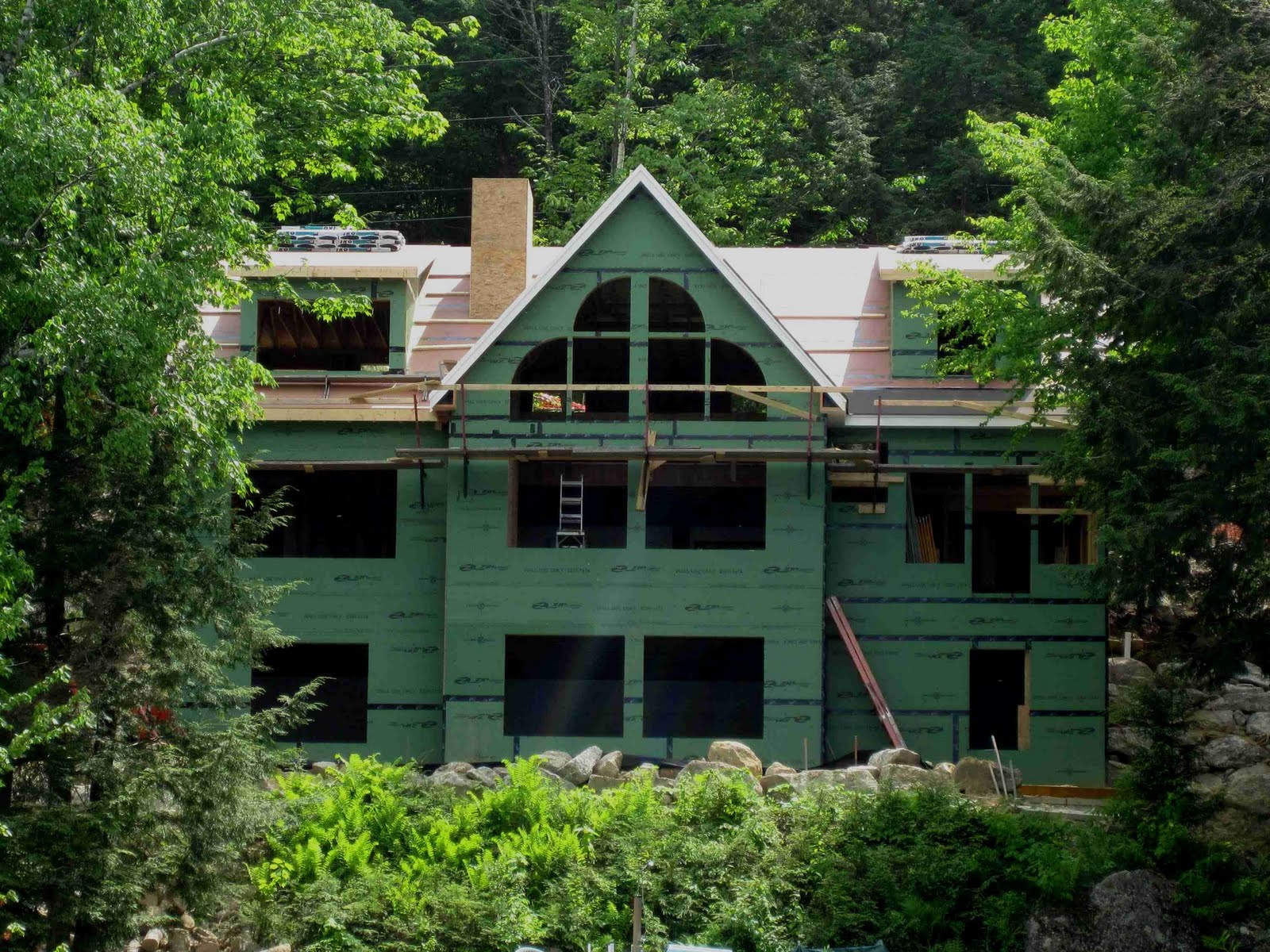
The newest house on Lake Wicwas is taking shape quite nicely now - it's going to be a beautiful house that really is matched well with the lot.  It's great to see how well both of the new houses this year blend in with their surroundings.


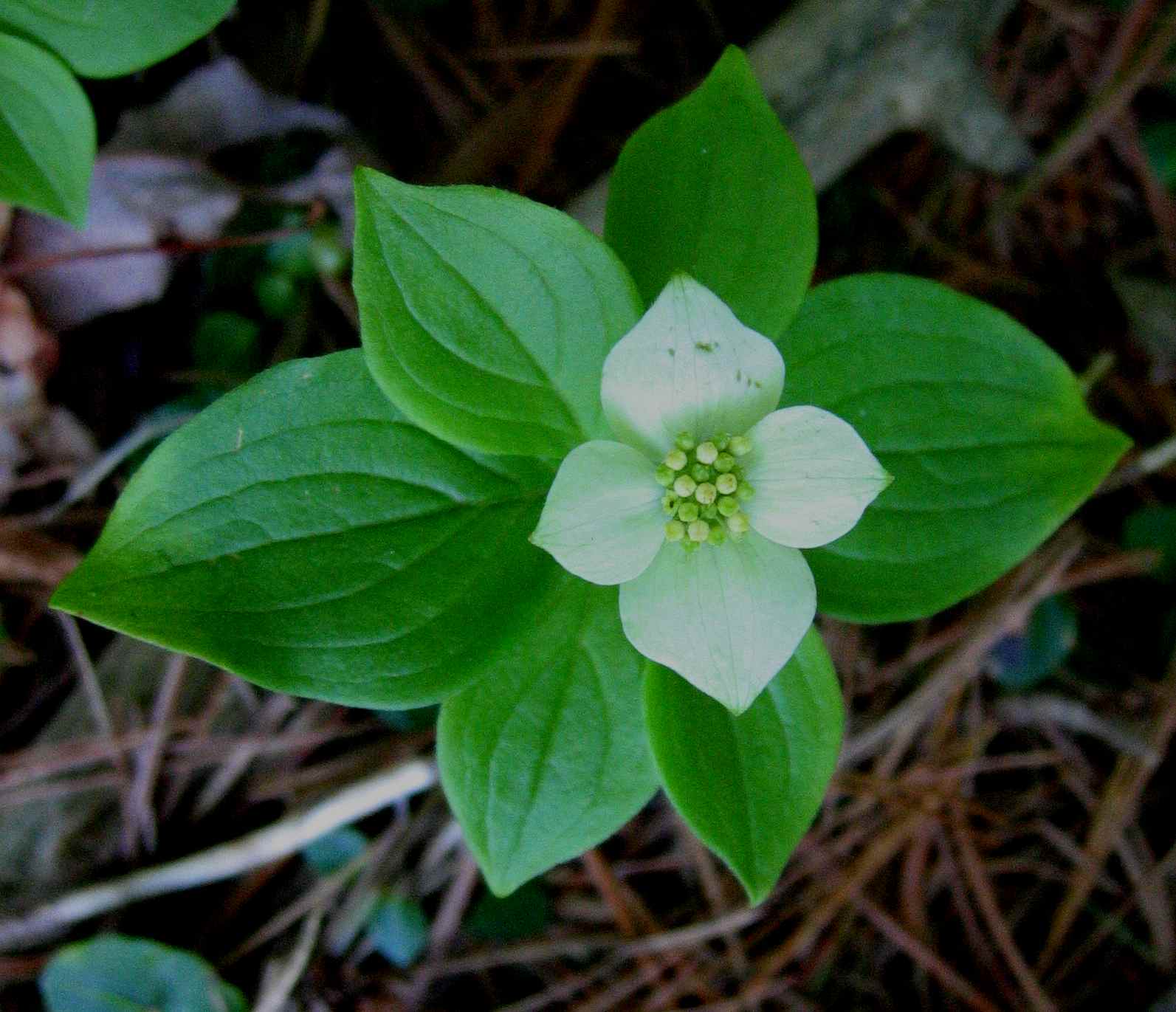
Bunchberry


The lady slippers are blooming now, another of the most spectacular flowers in New Hampshire.  The forest is also covered with bunch berry blossoms, a prelude to their red  berries later in the summer.


Lady Slipper