 |
| Eastern Kingbird |
The Phoebes are still around as proven by their loud raspy calls every morning, but the larger and more aggressive Kingbirds have achieved air superiority over the prime airspace near the edge of the lake. Kingbirds are known to harass much larger birds like crows, and even hawks, that dare invade their territory, so the little Phoebes had no choice but to move over. Being flycatchers, Kingbirds perch on trees near the water, darting out to catch insects, sometimes rather large ones like bees and dragonflies. They like to assume a position at the very top of a small tree where they have a 360 degree view of their world.

So it was unusual to see one fly down to terra firma and land on a rock.

It then flew over and landed near the edge of the woods.

But when it turned around, the reason was clear.
 |
| "This looks like a good floor joist for our nest." |
It was pleased with its selection and quickly flew off to wherever they are making their nest.

A Kingbird nest is formed with sturdy sticks to be strong enough to withstand the wind at the edge of a lake. The female kingbird does most of the nest building but the male will assist with bringing in sticks, so this is possibly the male. The nest is finished with a lining of soft material to protect the chicks and keep them warm. It's hard to believe it was eight years ago (June 26, 2018) that I was invited by good friends to observe a kingbird nest in a pine tree that had fallen into the lake near their home.
 |
| A nest well isolated from predators, but that must be sturdy enough to withstand the weather. |
That was a once-in-a-lifetime opportunity to watch a family of Eastern Kingbirds in action that I'll never forget! 
I'm keeping watch to see if I find where this pair's nest is, but so far, they're keeping it a secret.

🐦
I was dismayed to receive an alert from the NH DES this week that there are already two cyanobacteria blooms on New Hampshire lakes, including one far north in Littleton with a bacteria level more than twice the safe limit. The same day the warning was posted in Littleton, I drove by Lake Kanasatka and noticed all the activity at the boat launch on Rt 25 - they have started chemical treatment of the lake.


This $500,000 project involves putting aluminum sulfate into the lake to address their phosphorus and cyanobacteria problems.
 |
| I assume these tanks contain aluminum sulfate which is transferred to the small tanks on the boat. |
 |
| The equipment used to inject the chemicals into the lake. |
The Aluminum sulfate will bind to phosphorus in the lake to form aluminum hydroxide which then sinks to the bottom of the lake. This forms a barrier that reduces the amount of phosphorus released into the water, providing less nutrients to feed the cyanobacteria. You can read a detailed description of aluminum sulfate treatment in lakes here. Refer to last August for a reminder of the cyanobacteria bloom that shut down Lake Kanasatka for a good portion of last summer.
The state has now recognized the magnitude of this problem and appropriated $1M through HB2 for cyanobacteria mitigation in our water bodies. Here at Wicwas we are working proactively on steps to address the causes of high phosphorus levels in the lake before they get bad enough to close our lake or to put chemicals into it. There will be more to say on this topic in the coming weeks as well as at the annual lake association meeting in August.
Let's move on to cheerier subjects: spring wildflowers - the season is here! The Painted Trilliums have joined the Purple Trilliums in adding joy to the forest floor.
 |
| Painted Trillium |
Other flowers to keep a watch for on your journeys are the Starflower, Jack-in-the-Pulpit, Fringed Polygala, and violets (the violet ones).
 |
| Starflower |
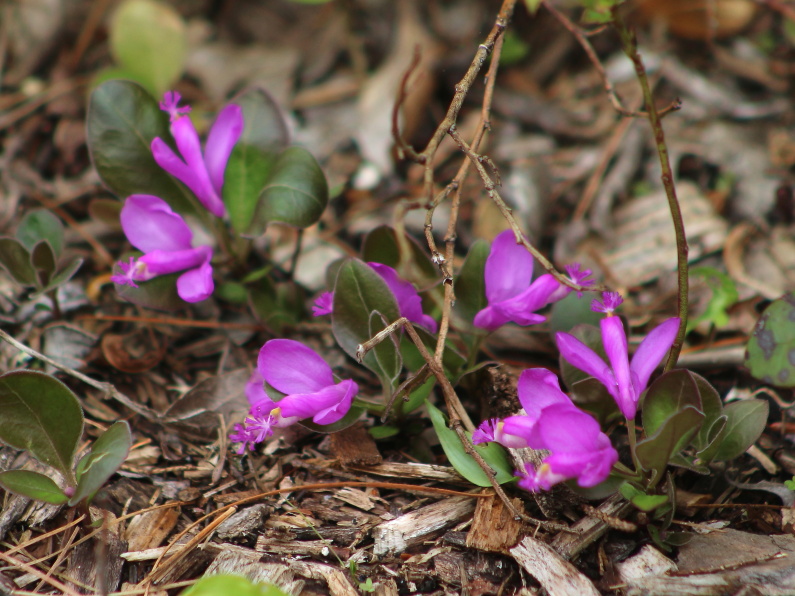 |
| Fringed Polygala |
Soon the Lady Slippers will join the party, so grab your bug spray and go smell the flowers!
 |


