Showing posts with label Cyanobacteria. Show all posts

Sunday, June 1, 2025

June 1, 2025: Spiny Water Flea

Hello June!  We're now enjoying the longest daylight hours of the year, and this week we had some beautiful days to soak in all that sunshine.


On one paddle around the lake I noticed how the water lilies had adapted to the high water levels.  

Yellow Pond Lilies with long stems.

They had to grow long stems to keep their leaves above water and gather the sunlight that gives them life, and now with the water dropping they're dangling on long tethers that funnel the food they create down to their roots.  A few days later they had blossomed.


With the water level just about back to normal we can expect the loons to be seeking nesting sites; the territorial battles seem to have settled down, though not stopped.  On Friday I had a pretty good hint that they are in search of nesting sites when a loon popped up right next to my kayak, between me and the shore.

A close encounter with a loon in protective mode.

It then dove and swam right underneath me, surfacing on the other side, luring me away from shore.  

I'll bet its mate was at the shoreline evaluating a potential nest site; I didn't go looking, but rather continued quickly on my way.  It may be a little later than the ideal nesting period but there's still plenty of time to nest and raise chicks.  The biggest concern would be a heat wave in June or early July when they are sitting on their eggs.  


I love the different shades of green in the forest as the leaves on the deciduous trees fully develop the chlorophyll that the gives them their deep green color.  

It makes it easy to differentiate between evergreen and deciduous trees.
The view from above at Crockett's Ledge.

Soon their leaves will match the hue of evergreens that keep their through the winter.


I received a report from people fishing in Winnipesaukee and Squam that the Spiny Water Flea, a small, invasive crustacean, has grown to high population levels in both lakes.  

Spiny Water Flea shown on a pencil eraser.  Photo from NH Fish and Game.

This animal poses no health concerns to humans, but it is a problem for native animals as it alters the food web, and its sharp body parts can damage the internal organs of fish.  By feeding on native zooplankton, it can reduce the amount of plankton that consumes algae, leading to larger algal blooms.  The flea also causes problems with fishing lines.

Clogging up a fishing line.  Photo by Jeff Gunderson.

The spiny water flea is native to Asia and Europe and was brought to America by cargo ships, first found in the Great Lakes in the 1980s and making their way to Vermont by 2013.  It was found in both Winnipesaukee and Winnisquam in 2023.  Although NH laws requiring draining and drying boats between different water bodies will help slow its spread, it will undoubtedly find its way to all the lakes over time.  

One advantage Lake Wicwas has is its smaller size and high nutritive value.  According to NH DES the flea "seems to prefer the open water areas of large, low-nutrient lakes".  [Ref:  NH DES Environmental Fact Sheet NN-68]  Of course, the high nutrient content of Wicwas supports other problems such as increased vegetation growth of both native and invasive aquatic plants.  It also provides a good foundation for cyanobacteria blooms.

In other water quality news, we've already had a minor outbreak of cyanobacteria in Wicwas; I found it in many locations around the lake this week. 

Cyanobacteria along the west shore of Lake Wicwas.

NH DES tested a water sample and found a concentration of 25,900 cells/liter which is below the threshold level of 70,000, but it's still wise to be vigilant when you swim and to not let pets drink the water.  Keep an eye out for bright green flecks suspended in the water column, sometimes described as looking like a snow globe. 
Cyanobacteria suspended in the water.  Pollen doesn't typically do that.

As a cyanobacteria bloom expands it may rise to surface as a green scum, and then sink to the bottom of the lake.


New wildflowers sprouted this week.  Watch for the common four-petaled white Bunchberry and Pointed Blue-eyed Grass.  

Pointed Blue-eyed Grass.


I'll end with the end - the end of a beautiful day on Lake Wicwas.


Sunday, May 19, 2024

May 19, 2024: Eastern Kingbird

A pair of Eastern Kingbirds appears to have taken over the local hunting grounds from the Phoebes.
Eastern Kingbird

The Phoebes are still around as proven by their loud raspy calls every morning, but the larger and more aggressive Kingbirds have achieved air superiority over the prime airspace near the edge of the lake.  Kingbirds are known to harass much larger birds like crows, and even hawks, that dare invade their territory, so the little Phoebes had no choice but to move over.  Being flycatchers, Kingbirds perch on trees near the water, darting out to catch insects, sometimes rather large ones like bees and dragonflies.  They like to assume a position at the very top of a small tree where they have a 360 degree view of their world.

So it was unusual to see one fly down to terra firma and land on a rock.  

It then flew over and landed near the edge of the woods.

But when it turned around, the reason was clear.
"This looks like a good floor joist for our nest."

It was pleased with its selection and quickly flew off to wherever they are making their nest.

A Kingbird nest is formed with sturdy sticks to be strong enough to withstand the wind at the edge of a lake. The female kingbird does most of the nest building but the male will assist with bringing in sticks, so this is possibly the male.   The nest is finished with a lining of soft material to protect the chicks and keep them warm.  It's hard to believe it was eight years ago (June 26, 2018) that I was invited by good friends to observe a kingbird nest in a pine tree that had fallen into the lake near their home.  
A nest well isolated from predators, but that must be sturdy enough to withstand the weather.


That was a once-in-a-lifetime opportunity to watch a family of Eastern Kingbirds in action that I'll never forget! 

I'm keeping watch to see if I find where this pair's nest is, but so far, they're keeping it a secret.
 🐦

I was dismayed to receive an alert from the NH DES this week that there are already two cyanobacteria blooms on New Hampshire lakes, including one far north in Littleton with a bacteria level more than twice the safe limit.  The same day the warning was posted in Littleton, I drove by Lake Kanasatka and noticed all the activity at the boat launch on Rt 25 - they have started chemical treatment of the lake.


This $500,000 project involves putting aluminum sulfate into the lake to address their phosphorus and cyanobacteria problems. 
I assume these tanks contain aluminum sulfate which is transferred to the small tanks on the boat.

The equipment used to inject the chemicals into the lake.

The Aluminum sulfate will bind to phosphorus in the lake to form aluminum hydroxide which then sinks to the bottom of the lake.  This forms a barrier that reduces the amount of phosphorus released into the water, providing less nutrients to feed the cyanobacteria.  You can read a detailed description of aluminum sulfate treatment in lakes here.  Refer to last August for a reminder of the cyanobacteria bloom that shut down Lake Kanasatka for a good portion of last summer.  

The state has now recognized the magnitude of this problem and appropriated $1M through HB2 for cyanobacteria mitigation in our water bodies.  Here at Wicwas we are working proactively on steps to address the causes of high phosphorus levels in the lake before they get bad enough to close our lake or to put chemicals into it.  There will be more to say on this topic in the coming weeks as well as at the annual lake association meeting in August.


Let's move on to cheerier subjects:  spring wildflowers - the season is here!  The Painted Trilliums have joined the Purple Trilliums in adding joy to the forest floor.
Painted Trillium


Other flowers to keep a watch for on your journeys are the Starflower, Jack-in-the-Pulpit, Fringed Polygala, and violets (the violet ones).
Starflower

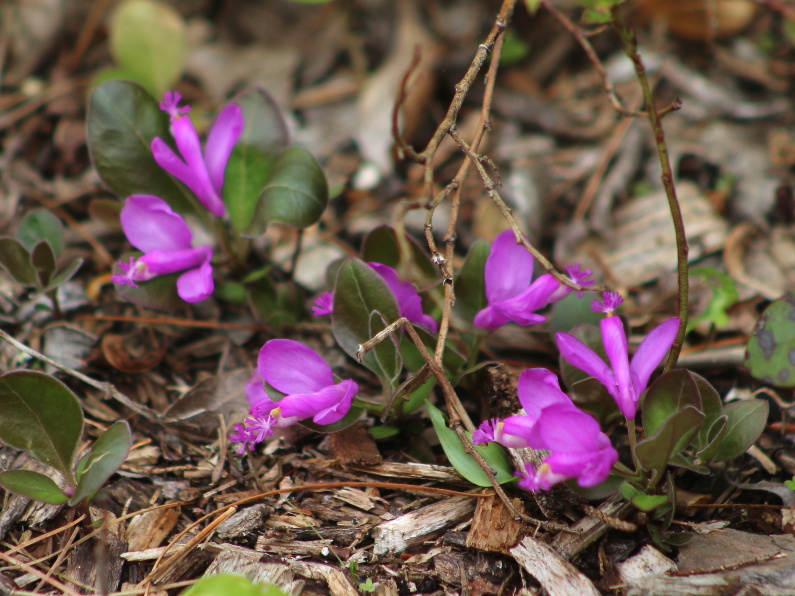
Fringed Polygala


Soon the Lady Slippers will join the party, so grab your bug spray and go smell the flowers!


Sunday, August 27, 2023

August 27, 2023: Cyanobacteria Hits Hard

This was supposed to be a cheery post about mountain hikes and close encounters with deer, bears, and wildfire smoke, as well as a beautiful paddle on one of our local lakes.  On the way home from one of these hikes, in the Ossipee Mountains, we drove by Lake Kanasatka which I've driven by a hundred times but have never paddled, and it looked so inviting that the very next day I went back with my kayak to explore the lake.  That's when things changed.  Unloading my kayak the lake looked simply beautiful - it was sunny and calm with the lake reflecting a bright blue sky.

Lake Kanasatka looks beautiful reflecting the blue sky from a distance.

But as I put my boat in the water, something wasn't right - the water at the launch was green.


It looked like a cyanobacteria bloom, but I thought it would be limited to right there where route 25 goes close by the lake.  As I paddled up the shore line it didn't get better, in fact it got worse.  


All the way up the west shore there were thick streams of cyanobacteria on the surface with more densely suspended throughout the water column, limiting visibility to about three feet.  


As I approached the north end of the lake the wind had come up a bit, creating small ripples that were stirring things up somewhat but the bloom was present even there at the inlet fed by Wakondah Pond.  I continued around and back down the east shore and as the lake became more sheltered from the breeze the bloom thickened again.  The entire shore of Kanasatka is populated with houses, docks, and beaches, but not a single person was in the water on this gorgeous day except for a few teenagers over on the east side by Camp Quinebarge.  The last camp session has ended so the swimmers were probably local residents.

Lake Kanasatka isn't a small pond where you might expect poor water quality:  At 371 acres, it's bigger than Wicwas, as well as Pemigewasset, Winona, White Pond, and many other good size lakes in New Hampshire.  If this can happen at Kanasatka, it can happen to all those water bodies and even larger lakes as water and air temperatures climb and runoff from development increases.  

This bloom was reported by NH DES on August 7th on their healthy swimming map, so it has been present for three weeks and counting.  It's a stark reminder that we must all be vigilant in protecting our natural resources.  If you want to help, get in touch with NHLakes, or a land trust such as the Lakes Region Conservation Trust, or your town's Conservation Commission, or your local lake association.  Whatever level of involvement you are comfortable with, you can help our lakes.  You can learn more about cyanobacteria at the NH DES website here.

Enough doom and gloom, lets move on to something more pleasant.  On that day hiking in the Ossipee Mountains we had clear skies with visibility over 75 miles.

Looking out over Castle in the Clouds from the Oak Ridge Trail.

We could see all the way to Mount Monadnock from the outlook on the Oak Ridge Trail.  

Lake Winnipesaukee and the Belknap Range.  Mt. Monadnock is barely visible in the photo.

Hiking up along the quiet trail we suddenly heard loud rustling in the trees above us.  Linda said right away, "that's not a squirrel".  Looking towards the sound I saw a large beech tree and we both knew what it was.  Up through the thick leaves we could see a large dark blob.  Yup, a black bear, staring right down at us.  

A black bear, displeased to be disturbed from either its slumber or its lunch.

One picture, and we were quickly on our way - I didn't even take the time to see if the beechnuts on the ground were as small as the ones I noted last week.  The bear was unlikely to abandon its comfortable perch in the branches surrounded by a feast of beechnuts, but still, no reason to test that theory.  I tagged the location - next time I'm on that trail in winter when the branches are bare (no pun intended) I'll try to remember to look for a bear nest.


The season for goldenrod has arrived.  

A sea of goldenrod blooms along Eastman Road heading up to Steele Hill.

Huge yellow fields can be seen wherever fields are allowed to grow without mowing.  Goldenrod must thrive in this wet year we've had.

Thanks to the good camera work of a loon watcher (thank you LM!) we know that the parents of LuLu and Checkers are travelling far now to keep intruding loons away from the chicks.  The banded female was seen way over in Harris Cove as part of an asylum of seven loons, where she, and probably her mate, were letting the visitors know they need to keep moving - this lake is occupied.  The chicks meanwhile have been keeping close to the north end of the lake, and even when their parents aren't close by they're now swimming and diving out in open water.

From a distance it's hard to tell the juveniles from the adults now.


Though when the parents do arrive, the young still whine terribly, nagging them for food.  

One of the chicks hangs onto a parent's leg as it starts a dive.

I'll apologized for closing with a return to less a less cheery topic, but air can be as unhealthy as the water when the horrific wildfires blazing in Canada send smoke our way as happened again early in the week, though it did make for some unusually colored skies and dramatic sunsets.

A dusky orange sky at mid-morning sky seen from the Belknap Range.

A smoky sunset over Lake Wicwas.

You just have to enjoy whatever life sends you.


Saturday, August 14, 2010

August 14, 2010

Today was the First Annual Lake Wicwas Paddle Regatta, hosted by Tom and Sharon.  There was a great turn out - perhaps 20 vessels - ranging from one to three-person power, and participants ranging in age from under 10 to over 70.  Sadly, the start was delayed by the Powell crew - who showed up late - but the weather was perfect, nearly calm at the start, with a light southerly wind later on to keep everyone cool.  The event had great support from the committee boat throughout the course.
Afterward there was a BBQ with fabulous food, drink, and company, as well as prizes and certificates for everyone.  And of course, the terrific desserts!  Many thanks to Tom, Sharon, and Paula, and all the others who helped organize the event.

The Gracious Host


We may have set a record for the most boats on Lake Wicwas at one time, as there was a bass tournament taking place at the same time.  I was at the ramp this morning for Lake Host duty when they launched and started their day.  They were a great group of people, and most were well versed in exotic plants and the Lake Host program.


One of the best parts of hosting the early morning shift is watching the sun rise, highlighting Crockett's Ledge with orange light shining through the mist.


Crockett's Ledge at Sunrise
 There was also a beautiful sight looking east across the marsh and the Chemung forest.  


Anyone who wants to enjoy this experience can call Paul Trombi and sign up to be a Lake Host!


The only down part of the whole day was paddling over to the start of the regatta, in the calm water, where we went through a couple of large blooms of cyanobacteria (probably oscillatoria, as identified by NH DES).  The patches were approximately 45 feet across, with individual clumps 4 to 10 inches in size.  Not uncommon on Lake Wicwas and all lakes in NH, but something to be attentive to, both to the toxic properties of cyanobacteria, and the steps everyone can take to reduce its presence in our lakes. (Click here for information on cyanobacteria from the NH DES).