The loon activity has been way over the top this past week. It began with reports by two observant parties of a loon acting strangely on the lake - just floating for long periods of time and not diving or fishing. Though loons can act like this, the local LPC loon biologist asked me to go out and investigate, and if I could find the suspect loon, instructed me to approach it slowly to see if it would dive. It took me two searches of the lake before I found the right loon, hanging close to shore far away from the other loons on the lake, with a leg held out in an awkward position.
 |
| An unusual pose for a loon. |
I've often seen loons wag their foot, sometimes for a minute or longer (the reason why they do this isn't known, but one theory is for temperature management) but never in this position with the whole leg exposed. I did approach the loon slowly, and it continued to hold that foot out and it did not dive. It did however swim away from me, but only using one foot.
 |
| I've never seen a loon try to swim with only one foot paddling. |
Any time I've seen a loon weigh anchor and get underway it has always used both paddles, and this poor bird swimming along using just one foot told me something wasn't right. By the time I found it in the late afternoon the LPC biologists were preparing for night time banding, so a mission to assess the bird had to wait until the next morning when I met two of the biologists who came prepared with a large net to capture the injured bird for assessment and possible treatment.
We were able to locate the bird in just about the same location, but it took a moment to be sure because now the questionable leg wasn't held in the air, but rather flat against the water, thought still looking unnatural. But this time, as we approached, the bird dove! And I was able to watch it swim rather swiftly under the water. After watching a second dive the biologists determined the bird was healing quickly and was able to again catch fish and defend itself, so it was decided to let it be. They asked those who first reported the concern to keep an eye on it, and thanked them for their quick action in reporting the injury.
I asked the LPC team what might have caused an injury like this and the two likely causes are a fight with another loon - a battling loon will grab hold of any body part it can get - or a snapping turtle with a big appetite. They told of story when someone observed a loon struggling in the water, unable to swim, until it finally escaped the grasp of a large turtle. That would hurt a leg!
While the LPC biologists were here we toured the entire lake, surveyed the loons present (six), inspected both loon nests, and collected the shell fragments from Maddie's egg.
 |
| LPC biologist Caroline Hughes searches (unsuccessfully) for signs of an egg at the Marion Cove nest while summer intern Tayor Tewksbury records GPS coordinates. |
.JPG) |
| Every last shell fragment of Maddies's egg was carefully collected from the Harris Cove nest. |
The next loon event was a two day, maybe longer, battle between two loons, one of which was the banded female from the nest in Marion Cove. The first time I watched them they spent well over an hour battling each other in the cove. They were circling, diving, chasing, at one point right up against the shore. They progressed all the way around the cove and were still going after each other as they went out of sight.
The next day the same thing occurred. I can only assume it's two females fighting. I understand that male loons secure and defend a mating territory while the females fight over a male. So perhaps a new female has arrived and the banded female is trying to drive her off to defend her position with the banded male. Or perhaps the intruder is trying to drive off the current female to take over its mate - it's impossible to tell who's the antagonist, but it's been going on long enough that I'm starting to wonder if it will continue until the weaker bird is exhausted and perhaps killed.
The injured loon was reported before I saw these encounters, so perhaps it was injured in an earlier fight, but it would have had to heal well enough to go back to fight again. This scenario is hard to watch, but it was only last year that this very same banded female drove off our previous mate to the banded male, and that female (which was also banded) hasn't been seen since.
 |
| Our present female drove off our long-term nesting female last summer. She's very proud of her jewelry. |
As I said last week, it's a tough life, being a loon.
Immediately following four weeks of nest duty it appears loons are hungry. I watched one of the northern-pair loons play with a huge sunfish it caught in order to subdue it sufficiently to swallow it whole.
 |
| A big sunfish. |
It caught the fish, thrashed it around, released it, caught it again and repeated the process for several minutes.
 |
| Wearing the fish out by catching it again and again. |

It made one attempt to swallow it but decided it was still too lively.
 |
| Not this time. |
So the loon played with it for another minute or two before it finally managed to send it down to its gizzard.

 |
| Down it goes. |
 |
| Talk about getting a fish bone stuck in your throat! |
Imagine swallowing a whole fish, bones, scales, and all, and digesting it in your stomach. No wonder they swallow small stones (and sometimes lead sinkers) to help grind up their food.
And this came in late Saturday: Another loon observer (thank you CF!) reported a loon on the side of Chemung Road near the lake. Dave and Marge Thorpe went right out to investigate and found the loon no longer on the road, but in the thick weeds close to the road. It did make its way back out to the lake on its own. Could this be the injured loon from earlier in the week? Just another mystery on the lake.
And of course, there is Maddie.
 |
| Maddie goes for a ride. |
As of late Saturday she is doing fine and her parents are already taking her on long excursions away from the nest. She's being fed well, is growing quickly, and evidently being kept well away from the other loons; she has been consistently observed with her parents way over on the west side of the lake along the Hamlin conservation area where no loons have nested recently.
 |
| A little fish for a little loon. |
It seems they moved the family over there to distance themselves from all the drama taking place on the lake.
That's too much loon action for one week, so as not to go on too long, I'll just add few pictures from a morning walk along Chemung Rd. (Happily, no loons were seen on the road.)
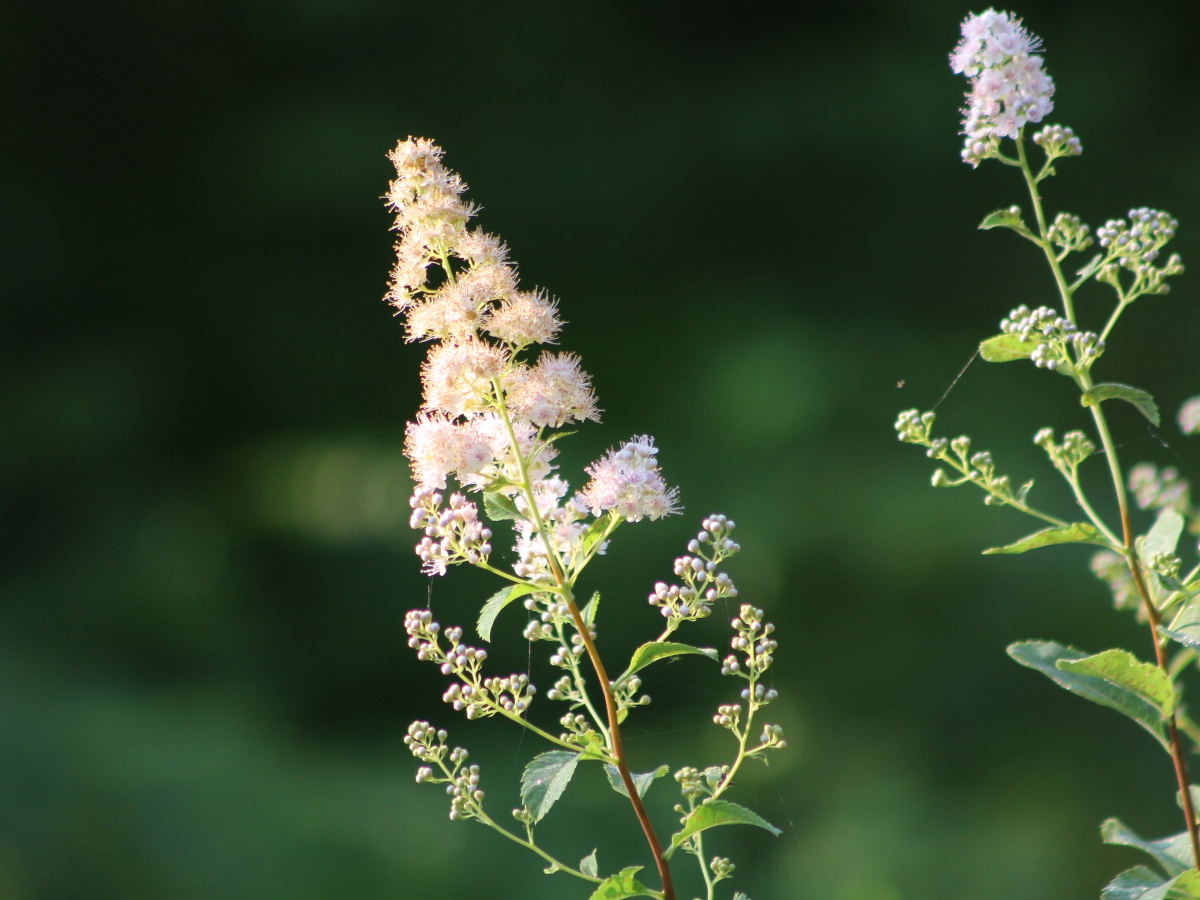 |
| Meadowsweet on the side of the road. |
 |
| A gray catbird sings good morning. |
 |
| A bowl and doily spider web snags small insects. |
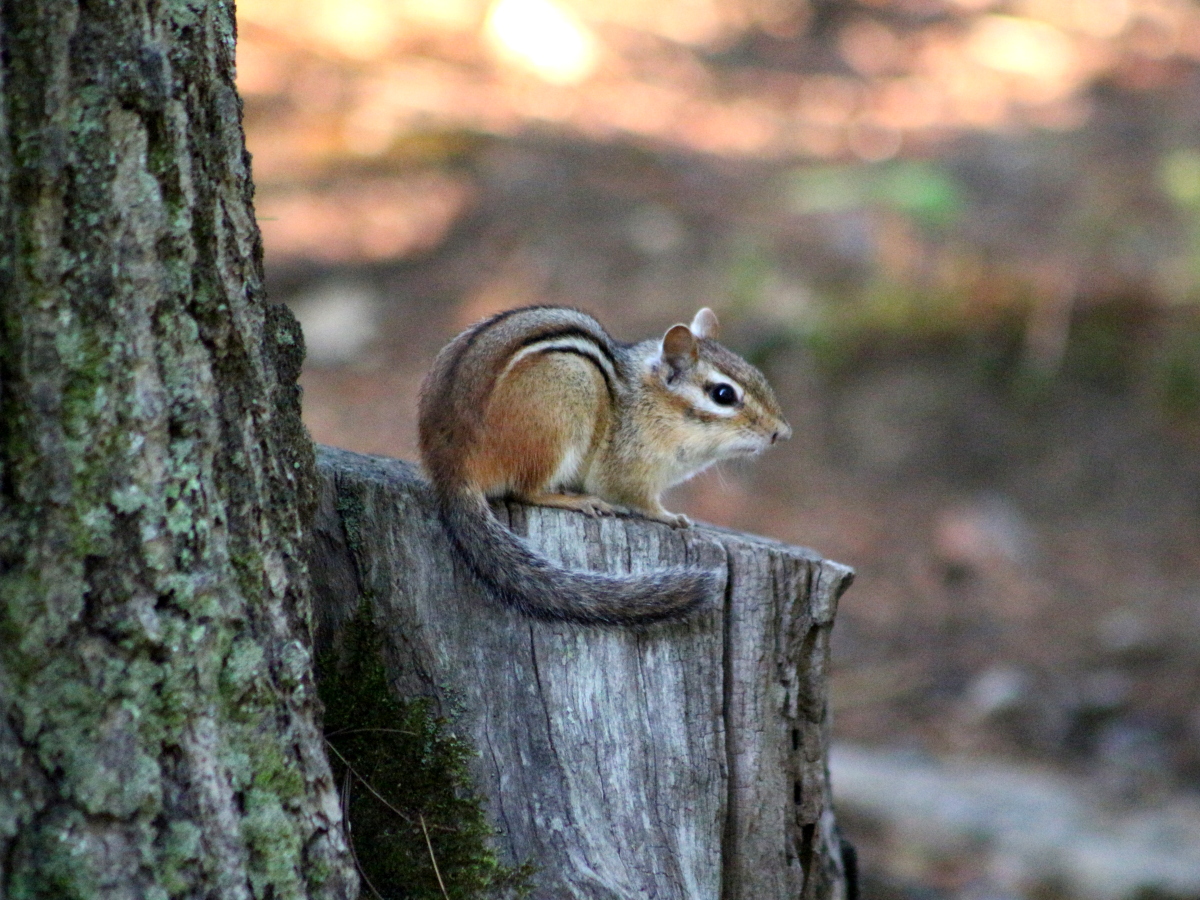 |
| Eastern chipmunk on lookout. |
All of these were along just a quarter mile stretch of Chemung Road by the Chemung State Forest. One doesn't have to travel deep into the forest to find interesting sights!
 |
| Photo and caption by Debby Crowley. |