Showing posts with label Loon attack. Show all posts

Sunday, July 24, 2022

July 24, 2022: Loon Overload

The loon activity has been way over the top this past week.  It began with reports by two observant parties of a loon acting strangely on the lake - just floating for long periods of time and not diving or fishing.  Though loons can act like this, the local LPC loon biologist asked me to go out and investigate, and if I could find the suspect loon, instructed me to approach it slowly to see if it would dive.  It took me two searches of the lake before I found the right loon, hanging close to shore far away from the other loons on the lake, with a leg held out in an awkward position.  

An unusual pose for a loon.

I've often seen loons wag their foot, sometimes for a minute or longer (the reason why they do this isn't known, but one theory is for temperature management) but never in this position with the whole leg exposed.  I did approach the loon slowly, and it continued to hold that foot out and it did not dive.  It did however swim away from me, but only using one foot. 

I've never seen a loon try to swim with only one foot paddling.

Any time I've seen a loon weigh anchor and get underway it has always used both paddles, and this poor bird swimming along using just one foot told me something wasn't right.  By the time I found it in the late afternoon the LPC biologists were preparing for night time banding, so a mission to assess the bird had to wait until the next morning when I met two of the biologists who came prepared with a large net to capture the injured bird for assessment and possible treatment.  

We were able to locate the bird in just about the same location, but it took a moment to be sure because now the questionable leg wasn't held in the air, but rather flat against the water, thought still looking unnatural.  But this time, as we approached, the bird dove!  And I was able to watch it swim rather swiftly under the water.  After watching a second dive the biologists determined the bird was healing quickly and was able to again catch fish and defend itself, so it was decided to let it be.  They asked those who first reported the concern to keep an eye on it, and thanked them for their quick action in reporting the injury.

I asked the LPC team what might have caused an injury like this and the two likely causes are a fight with another loon - a battling loon will grab hold of any body part it can get - or a snapping turtle with a big appetite.  They told of story when someone observed a loon struggling in the water, unable to swim, until it finally escaped the grasp of a large turtle.  That would hurt a leg!

While the LPC biologists were here we toured the entire lake, surveyed the loons present (six), inspected both loon nests, and collected the shell fragments from Maddie's egg.  

LPC biologist Caroline Hughes searches (unsuccessfully) for signs of an egg at the Marion Cove nest while summer intern Tayor Tewksbury records GPS coordinates.

Every last shell fragment of Maddies's egg was carefully collected from the Harris Cove nest.

The next loon event was a two day, maybe longer, battle between two loons, one of which was the banded female from the nest in Marion Cove.  The first time I watched them they spent well over an hour battling each other in the cove.  They were circling, diving, chasing, at one point right up against the shore.  They progressed all the way around the cove and were still going after each other as they went out of sight.  

The next day the same thing occurred.  I can only assume it's two females fighting.  I understand that male loons secure and defend a mating territory while the females fight over a male.  So perhaps a new female has arrived and the banded female is trying to drive her off to defend her position with the banded male.  Or perhaps the intruder is trying to drive off the current female to take over its mate - it's impossible to tell who's the antagonist, but it's been going on long enough that I'm starting to wonder if it will continue until the weaker bird is exhausted and perhaps killed.  

The injured loon was reported before I saw these encounters, so perhaps it was injured in an earlier fight, but  it would have had to heal well enough to go back to fight again.  This scenario is hard to watch, but it was only last year that this very same banded female drove off our previous mate to the banded male, and that female (which was also banded) hasn't been seen since.  

Our present female drove off our long-term nesting female last summer.  She's very proud of her jewelry.

As I said last week, it's a tough life, being a loon.

Immediately following four weeks of nest duty it appears loons are hungry.  I watched one of the northern-pair loons play with a huge sunfish it caught in order to subdue it sufficiently to swallow it whole. 

A big sunfish.

It caught the fish, thrashed it around, released it, caught it again and repeated the process for several minutes.
Wearing the fish out by catching it again and again.


It made one attempt to swallow it but decided it was still too lively. 
Not this time.

So the loon played with it for another minute or two before it finally managed to send it down to its gizzard.
Down it goes.
Talk about getting a fish bone stuck in your throat!

Imagine swallowing a whole fish, bones, scales, and all, and digesting it in your stomach.  No wonder they swallow small stones (and sometimes lead sinkers) to help grind up their food.

And this came in late Saturday:  Another loon observer (thank you CF!) reported a loon on the side of Chemung Road near the lake.  Dave and Marge Thorpe went right out to investigate and found the loon no longer on the road, but in the thick weeds close to the road.  It did make its way back out to the lake on its own.  Could this be the injured loon from earlier in the week?  Just another mystery on the lake.

And of course, there is Maddie.

Maddie goes for a ride.

As of late Saturday she is doing fine and her parents are already taking her on long excursions away from the nest.  She's being fed well, is growing quickly, and evidently being kept well away from the other loons; she has been consistently observed with her parents way over on the west side of the lake along the Hamlin conservation area where no loons have nested recently.  
A little fish for a little loon.

It seems they moved the family over there to distance themselves from all the drama taking place on the lake.

That's too much loon action for one week, so as not to go on too long, I'll just add few pictures from a morning walk along Chemung Rd. (Happily, no loons were seen on the road.)
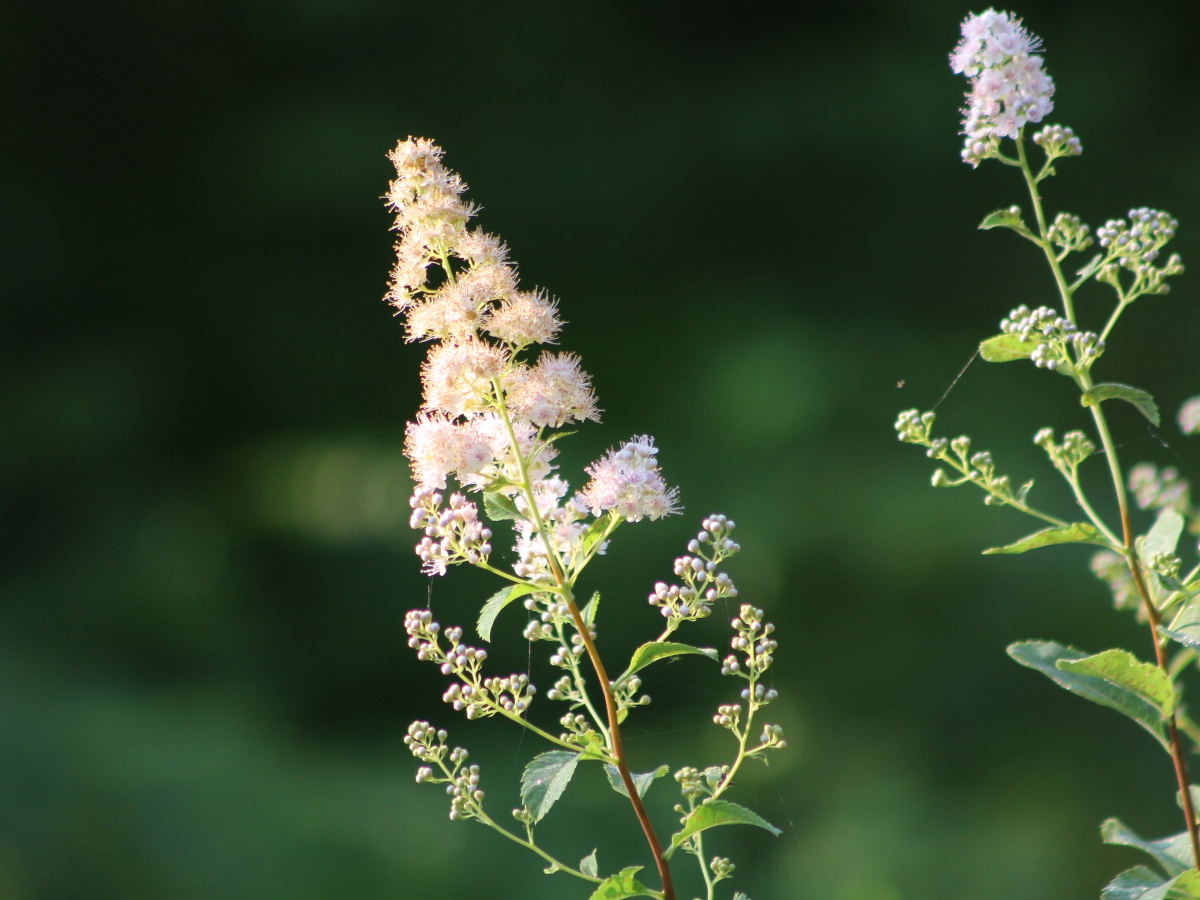
Meadowsweet on the side of the road.

A gray catbird sings good morning.
A bowl and doily spider web snags small insects.
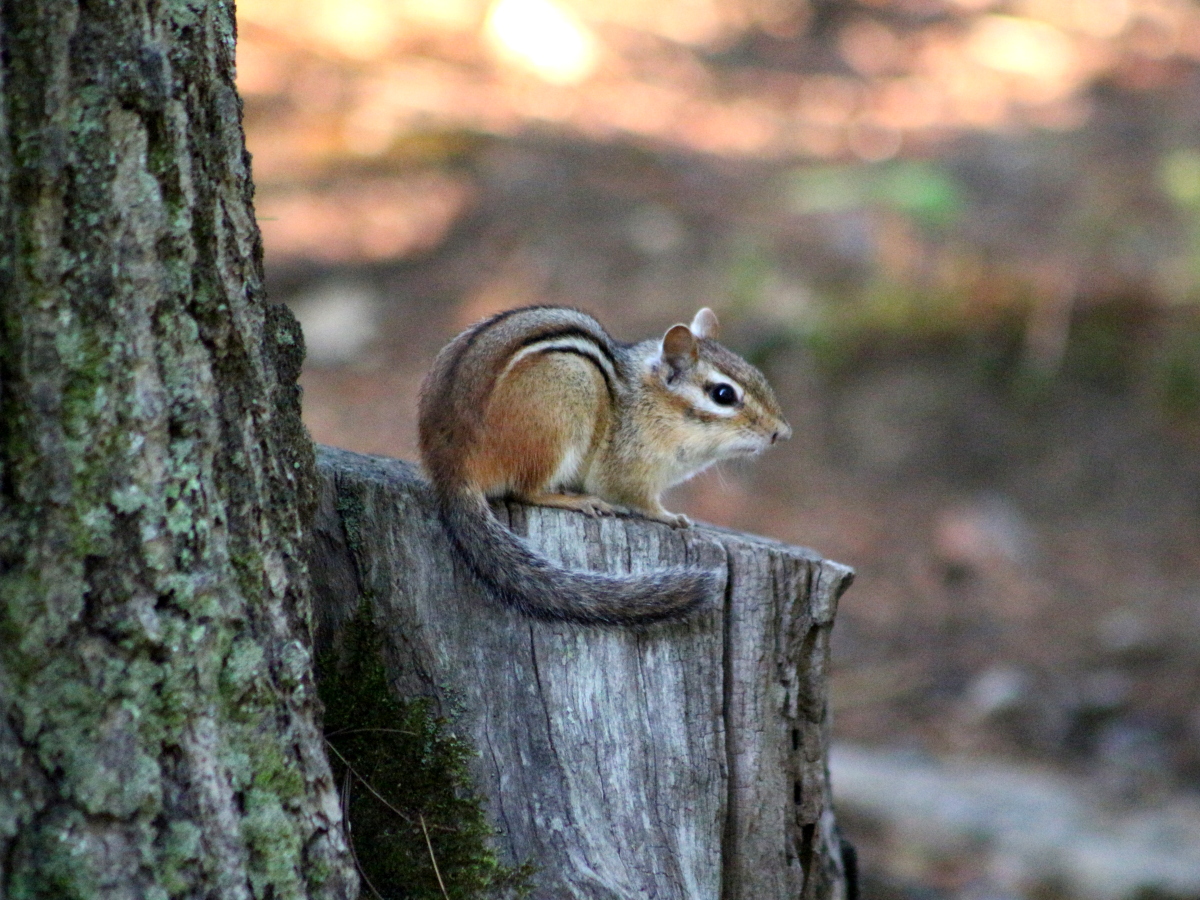
Eastern chipmunk on lookout.

All of these were along just a quarter mile stretch of Chemung Road by the Chemung State Forest.  One doesn't have to travel deep into the forest to find interesting sights!

Photo and caption by Debby Crowley.


Sunday, June 19, 2022

June 19, 2022: Loon Killed and Breakfast by Airmail

Note:  This journal entry contains some unsettling news and pictures that may be disturbing to some readers.

It's tough out there in the world of nature.  

An osprey returns to the nest with breakfast for the family.

Fish are hunted by creatures large and small, from birds to bears to otters to tiny leeches and even other fish.  But even animals near the top of the food chain must always be vigilant.  If a bald eagle saw this osprey with a fish in its talons it wouldn't hesitate to swoop right in and steal that fish, and the osprey wouldn't even try to fight, it would just go off and catch another.

Osprey in flight.

Nature's harshness isn't just about food however.  Territorial battles can be just as deadly and many animals will fight to defend their turf.  Unfortunately Lake Wicwas was the location of a fatal territorial fight this week; this is the part of the story where it gets difficult.  Early in the week Gordon Loud sent me an email with the ominous subject "Dead Loon" along with a picture that left no doubt about it.


I headed out to try to collect the bird for the Loon Preservation Committee to study to determine the cause of death.  I picked up able-assistant Michael Marion on the way, and Gordan's directions along with the known wind direction led us right to the bird before the scavengers (snapping turtles, racoons, etc.) got to it.  There was great trepidation on my part wondering if it was going to be one of our banded loons; there has been a great deal of loud fighting on the lake this past week.  Of course, the loon could have died from lead poisoning or from being hit by a boat, but as soon as the loon was lifted from the water the cause of death was immediately apparent, and even somewhat relieving:  it was clearly killed by another loon, and it was not a banded bird.

A clear cause of death.

A single stab wound right through the sternum is the way one loon kills another - a four-inch spear accurately placed in the abdomen from below.  That's why we'll see multiple loons swimming around each other constantly dipping their heads under water to make sure an attack isn't coming from below.  I'll guess it's also why when one dives, they all dive.  The LPC will perform a necropsy and test for lead poisoning which could have weakened the bird, but I think we know the immediate cause of death.

There have been at least five loons on the lake lately and a lot of loud arguments have been heard.  The local LPC biologist was out on the lake again (before this attack) and she had sent me this observation:

"There was a heated territory dispute near the center of the lake between the two established pairs and an intruding loon. It lasted for nearly an hour, but in the end, the pairs returned to their respective territories and the intruder left the area."

Since the kill I have seen one pair in the north end of the lake, and Keith and Shayne Duggan have seen the Harris Cove pair still working on a nest on the island in that cove.  Of course we'll never know, but I think the facts point towards the dead loon being a rogue that one of the pairs finally got tired of being harassed by, and decided to take it out once and for all.  Knowing it died by natural causes helps a little but it's still difficult to see such a beatiful creature meet its demise.

As I said, it's a harsh world out there.  But there are reasons to be hopeful:  There are still two pairs on the lake and both continue to show signs they intend to nest.  So on a happier note, let's enjoy the beauty of summer in New Hampshire.
Daisies are having a great year.
Spiderwort or Asiatic dayflower (Commelina communis)

I just recently learned that spiderwort is considered an invasive species in some areas, though I didn't find it on any New Hampshire invasive species list.
Belted Kingfisher on Turtle Island - the first I've seen at Wicwas.

And it was peacefully sharing the tree with a dove.
A mourning dove and a kingfisher share a white pine.


Sheep Laurel (Kalmia angustifolia)

Amidst all this beauty I remain optimistic about our loons' nesting efforts and that we'll have father loons to celebrate later this summer.  Until then, happy Father's Day to all fathers!

Sunday, July 11, 2021

July 11, 2021: Big Moths and Big Snakes

I need to go back and catch up with some items that were neglected the past few weeks due to all the loon news on the lake.  First, the appearance of Luna Moths occurred quite some time ago and several people told me of their sightings including this one by Dotty Treisner who found two of them resting on the red siding of her house.

Luna Moth (Actius Luna).   Photo by Dotty Treisner.


Though jealous of these sightings because I haven't seen one myself in many years I'm always excited to know these beautiful, huge moths are still present in the Lakes Region.  A big reason they're not often seen is that they only live for about a week in their adult, moth form, during which time they mate but they don't eat - they don't even have a mouth or a digestive tract.  All their food consumption occurs while they are a caterpillar, munching on tree leaves such as birch.

Another overdue observation dates all the way back to the rained-out bird walk that was to be led by UNH Extension Service biologist Mart Tarr at the Page Pond Community Forest.  As we were all waiting at the trailhead to see if the thunderstorm would pass quickly (it didn't) he mentioned there had been a lot of Baltimore Orioles in new Hampshire this summer.  Since I hadn't seen one of these bright orange birds yet this year I went out the next morning in the kayak to peruse likely oriole habitats, and sure enough I found one right away.
A Baltimore Oriole (Icterus galbula) sings from the highest branch of a white pine.   


They are such impressive birds and their loud, repeated song carries a long way over the water to lead you to them.  You can listen to their songs here.

Another impressive bird is the great blue heron which even standing three feet tall is often hidden among the weeds and bushes of the shoreline.  So it was an uncommon sight when Cindy Desmond saw one perched completely exposed on a raft.
A great blue heron (Ardea herodias) standing tall.  Photo by Cindy Desmond.


Wild creatures aren't ashamed to take advantage of human alterations to the environment when they suit their needs, sometimes to their benefit, sometimes to their demise.  Running along the side of the road one day I saw a bright green snake sunning itself on the edge of road, soaking up the heat from the pavement.   I stopped to encourage it to move farther from the road lest it become a participant of the old "Frogger" video game, but I was too late.  Though still alive and wriggling from what looked like a minor injury I'm pretty sure it wasn't going to survive the trauma it had endured.  And that wasn't the only snake-on-human-structure moment this week.  One morning I found this large northern water snake sunning itself on our dock when I went out for a paddle.
One warm, happy, water snake.

Like all snakes it wanted nothing to do with me and immediately slithered off the dock as I approached, but I was ready.  You probably shouldn't watch this video if you don't like snakes and ever want to swim in a lake again.


There's been plenty of stormy weather lately including the most recent heavy rains from tropical storm Elsa; the lake right now is a good six inches above full pond.  Did you catch the sunset as one of the recent storms departed?


I think our drought conditions have been largely remedied at this point.

I can't close without an update on the loons.  Coco and Jimmy were both doing fine at my last check on Saturday.  I don't see them as often now that they are widening their circle of travel all the way out to the area between Sheep and Bryant Islands.  Keep an eye out for them on your lake trips as they may be most anywhere on the northern portion of the lake in the coming weeks - they are still pretty small and vulnerable.
"Move your head dad, I can't see!"


My counterparts who report on the nature scene at Pleasant Lake in New London have been following an interesting loon story that mirrors our experience with a mate change.  But the female loons battling each other on Pleasant Lake have not given up the fight and it's taking a toll on everyone.  Their reporting implies that male loons fight over territory while female loons fight over males.  This week's report is dramatic, violent, and heart wrenching, but it's worth reading to better understand these complex animals.  You can find their report here; it will make you appreciate how fortunate we are to be having a peaceful year on Wicwas.

Nap time on Lake Wicwas.

Friday, August 2, 2019

August 2, 2018: Lake Wicwas Becomes a Battleground

I'm posting early this week so people will receive it before the Lake Wicwas Annual Meeting tomorrow, Saturday, August 3rd (9:30 am at the Wicwas Grange on Meredith Center Road.)


Lake Wicwas became a battle ground this week and we learned again just how harsh nature can be, and the impact of humans as well.  Tom Crane, a resident on the north shore of the lake, described a horrific lesson on the territorial behavior of loons.  In front of Tom's house, two people experienced a fight between two loons which was described as nothing less than "brutal".  When it was over a seriously injured loon swam to the shoreline to recuperate, clearly the loser of the fight.  But a few days later, a dead loon was found against a nearby shoreline.  Tom collected it and was relieved that it was not banded, indicating it was neither parent of the chicks.  The Loon Preservation Committee came to pick it up and have already performed a necropsy to determine the specific cause of death:  although the bird did suffer from injuries from the fight, the primary cause of death was lead poisoning.  (Loons ingest small stones to help with digestion in their stomachs, and they frequently collect small lead fishing sinkers and jigs which look like stones, and which quickly kill them).

One can only speculate on the motivation of the fight, and if the attacking loon recognized the weakened state of the poisoned bird and took advantage of that.  Was the victim our rogue loon "Solo" that has been on the lake for several years now, and one of the parents of Harley and Davidson decided this was its chance to eliminate it?  Was it a bird from the other pair on the lake?    Or maybe it was just a visiting loon that stopped here in its weakened state to rest.  We may never know, but if Solo, who has been spending a lot of time in Marion Cove the past few years never reappears, that might be a clue.  All we know for sure is there is one less loon in New Hampshire, that lead fishing tackle is responsible for 44% of loon deaths [Ref:  Concord Monitor, July 18, 2019], and that these beautiful, majestic birds will fight literally to the death over territory, offspring, or some other reason.


I had my own little battle over in the blueberry bushes this week.  I was picking berries on some high-bush blueberry plants when I noticed a lot of bare branches - areas that were completely denuded of leaves.
A blueberry bush stripped of its leaves

I knew something had to be eating them so I searched around a bit and soon enough came across a bunch of brightly colored but not very pleasant looking caterpillars.
Yellow-necked Caterpillars (Datana ministra)

There were two colonies on this plant, as well as some on another bush I saw.

I found a little information on these insects, including that the behavior of lifting up both their head and tail when disturbed is common.  [Ref:  UNH Extension Service].  I don't know if that successfully scares off predators, but to me it certainly makes them look threatening.

The adult moth is just a typical, medium-sized brown moth, but it does have a reddish head.
Adult moth.  Photo Credit:  John Pickering, Discover Life
It appears that birds don't eat the caterpillars or the moths, but some, such as robins, do eat the pupae.  Also "predaceous bugs and parasitic flies may also attack this species."  [Ref:  Penn State University Extension Service]  The caterpillars are damaging to orchards, and blueberries are one of their preferred host trees.  UNH says spot spraying is the best control method, but not on blueberry plants or any other tree with edible fruit, in which case it's best to pick them off by hand.  And then feed them to the fish.  And eventually the loons.  The circle of life goes on....

Which brings us back to Harvey and Davidson, which are getting bigger and starting to look less chick-like as they get gray-brown feathers and a white chest.  But we now know there is never a time in their lives when we can be certain they are safe.
Starting to look loon-like.
And starting to grow tiny flight feathers on their wings.