Showing posts with label Hickory Tussock Moth. Show all posts

Sunday, September 28, 2025

September 28, 2025: A Goldfinch Buffet

Large numbers of American Goldfinch have been feasting on the wildflower buffet provided by our hot, dry summer, and Linda's patch of Woodland Sunflowers is a popular dining spot now that the daisies and black-eyed Susans have closed up shop for the summer.

An American Goldfinch dines in the sunflower department.

Goldfinch are so light (they weigh about half an ounce) they can flit from blossom to blossom, perching on the top of each stem to rip out seeds for as long as they like.  
Did you see the bumblebee sharing the flower patch?  Here's an interesting fact about goldfinches:  They are strict vegetarians, consuming animals (insects) only by accident.  And for this reason, when a Brown-headed Cowbird lays an egg in a goldfinch nest for the goldfinch pair to raise, it inevitably dies because it can't survive on a diet consisting of purely seeds.  [Ref: Cornell Lab of Ornithology]

Several varieties of asters have taken over the open fields from the Black-eyed Susans as the predominant flower, and the goldfinches enjoy these as well.  I think asters must thrive in dry hot weather because they're so abundant and healthy.  I found these Savory-leaf Asters a couple of weeks ago, but they are still blooming, even without much rain.

Savory-leaf Aster (Ionactis linariifolia)

Without much rain until Thursday that is, when the Lake Wicwas weather station recorded 3.5" of much needed precipitation.  

That was a good start to addressing the rain deficit present throughout all of New Hampshire.

The goldenrod doesn't seem quite as prolific as some years but it still dominates many fields.  I found a monarch partaking in the nectar on this goldenrod plant.


I also learned of a new flower, easily overlooked as it's not very flamboyant.  I had probably assumed it's a goldenrod plant that hasn't turned yellow, but in fact it's a related plant called Silverrod.
Silverrod (Solidago bicolor) also known as White Goldenrod.

Both silverrod and goldenrod are also in the Asteraceae (aster) family.  Yet another variety of aster was growing on the ledges of Mount Cardigan and Firescrew:

Mountain Aster (Oclemena acuminata)

Also at an elevation of 3100' on Cardigan were quite a few Mountain Ash trees.

America Mountain Ash (Sorbus americana)

This reminded me of a stand of Mountain Ash on Mt. Roberts.  Look for them if you hike Mt Roberts at this time of year.  


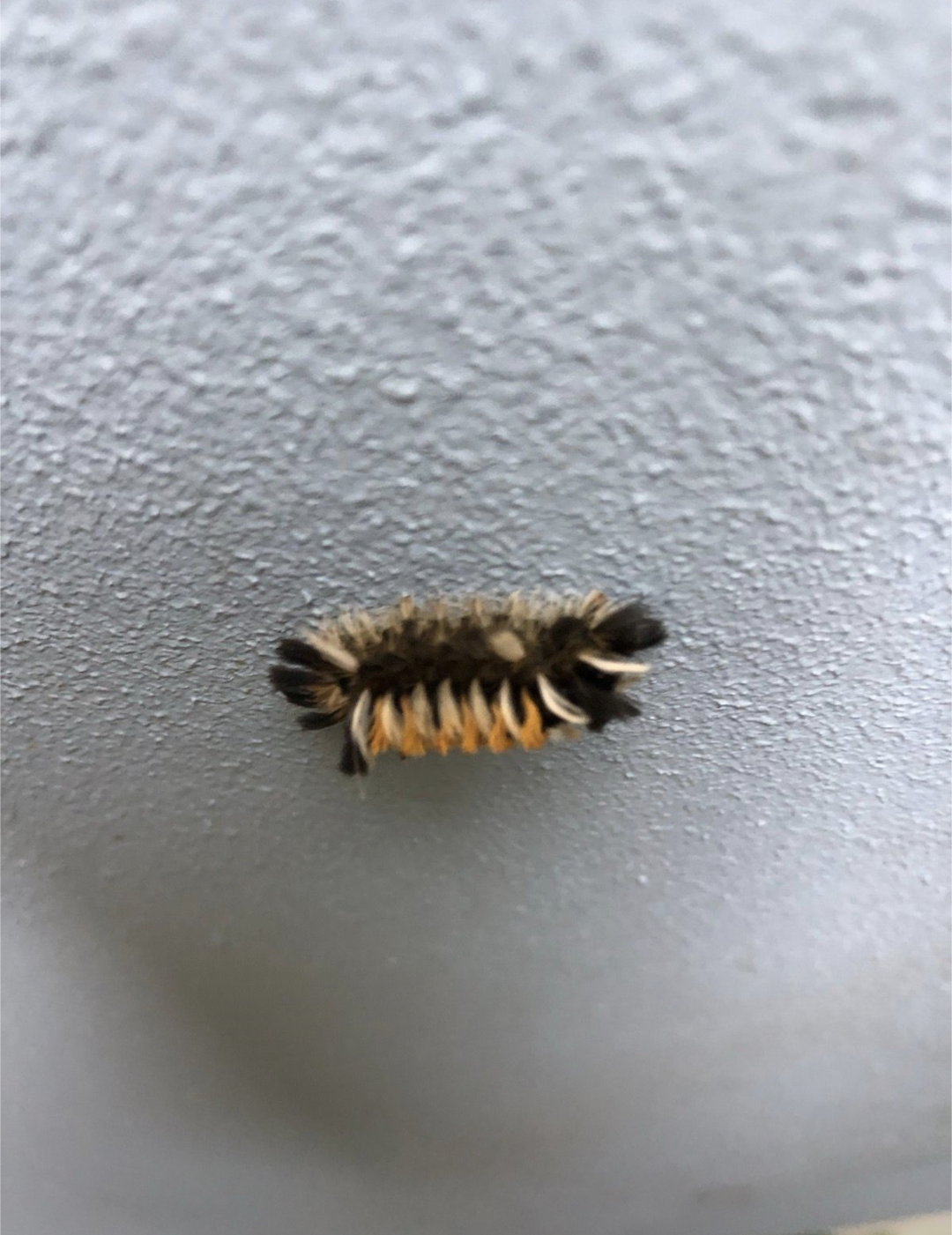
There are at least two varieties of Tussock Moth caterpillars feeding on deciduous trees right now.  I've seen Hickory Tussock and Spotted Tussock caterpillars so far.

Hickory Tussock Moth caterpillar

Spotted Tussock Moth caterpillar on a birch leaf.

Keep your eye out for these on your walks.  They are pretty, but not good to touch as their long hairs have toxic chemicals that can cause a skin rash.


Now an update the loons.  Through I didn't Spangle this week, others have, and Eric Smith sent me some great pictures of her that he took last week.

Photos by Eric Smith
As large as she is now, she's still happy to have mom or dad bring her food.  

Amy Wilson also took some great pictures of Spangle swallowing a large sunfish that one of her parents caught for her.  You can see those pictures here.  

It appears only one parent is present, so it's possible the male has moved on the to ocean for the winter.  Thank you Jeff and Amy for sharing these great photos!  

A few people have asked about Spangle's younger brother, Star.  He disappeared around August 15th, at a time when there were rogue loons on the lake, sometimes as many as four at once.  We'll never know, but it's possible that Star was killed by one of these rogues.

Lastly, fall foliage season has begun.  I think the Lakes Region and north will be past peak by Columbus Day, so do your leaf-peeping early this year!


Sunday, August 20, 2023

August 20, 2023: Little Red Eft

I sure have seen a lot of these little guys lately with all the rain we've had - it brings them onto the trails in droves.  One day mountain biking there were so many that they were the biggest obstacle to avoid on the trails.
Eastern Newt (Notophthalmus viridescens), Red Eft phase

The red eft is the intermediate stage of the Eastern Newt.  These amphibians start their life in the water as green-colored aquatic larvae with gills, then move onto land after a few months when they become this red eft form.  During this time they can travel "great distances" [Ref:  Smithsonian National Zoo] moving to a different water body in the process.  They live in this form for two or three years before a metamorphosis back to an aquatic animal, and their return to water as adults.  They mate in early spring with a single female depositing between 200 and 400 eggs onto various aquatic plants.  According to the above reference however, some populations remain in the red eft stage permanently and only return to water long enough to breed.  The life span of these small amphibians is 12 to 15 years, their long life perhaps helped by their production of a toxin that discourages predation by other animals.


Mid August is a good time to look for caterpillars.
Hickory Tussock Moth Caterpillar (Lophocampa caryae)

This Hickory Tussock Moth caterpillar was on the ground looking for a safe place to spin its cocoon, and nowhere near a hickory tree.  But oak is also a favorite food for these caterpillars and there are plenty of those around.  It's best not to touch any of the various types of tussock moth caterpillars, especially the hickory species as it can cause a severe allergic reaction if its sharp hairs pierce your skin.  

It's also a good time to look for caterpillars on milkweed plants, and not just for monarch butterfly caterpillars.  I found this small army of Milkweed Tussock Moth caterpillars on the underside of a milkweed leaf on the shoulder of Chemung Road.
Another tussock moth caterpillar, the Milkweed Tussock Moth (Euchaetes egle)

The whole tussock moth caterpillar started when a friend (thanks Tutu!) found this guy on a run down in New Jersey!


There are just a few milkweed plants around the lake as they grow mostly in fields that aren't mowed during the summer.  Around the lake we have mostly Swamp Milkweed.
Swamp Milkweed (Asclepias incarnata) on the shore of one of the Rawson Wood Islands.


I mentioned a couple of weeks ago the good pinecone crop this year.  They are really visible now in the tops of the trees, and the squirrels have begun to chew them off the trees to collect them before they release their seeds so they can store them away for winter.

I've also seen beech nuts underneath large beech trees, so the beech are starting to produce mast also.
Beechnuts on a trail in a hardwood forest.

The beechnuts are quite small this year, about half the size of what I expect to see.


There is a new development with the loons this week:  One of the chicks is starting show its independence.  Previously the two have always been close together, but now one of them is moving away from the family, starting to head out on its own.  
They sure have grown in two short months.
I can't tell them apart anymore.

There are still other loons visiting the lake, having daily interactions with the family.  One morning we watched two loons frantically wing-rowing back and forth and around the lake for long time, probably the chicks' father defending their territory.  When the chasing loon got close to the pursued, the later would thrust its head and one wing into the water making an abrupt stop and turn to throw off its pursuer - just like Starsky and Hutch's J-turn with the parking brake in their '76 Ford Gran Torino.  I wish I had some video of the chase for you.

I don't know how much stress eagles add to the loons' lives right now, but they are here, as this fabulous picture taken by Debby Crowley shows.
A bald eagle watches over all activity on Lake Wicwas.


I'll end today with a non-nature picture, but it's a really neat sight.  There are a lot of pretty boats on New Hampshire's lakes, but few as beautiful as this classic.
"N. H. Dreamin' " cruises the waters of Lake Wicwas.

Keep watching for those fuzzy caterpillars!