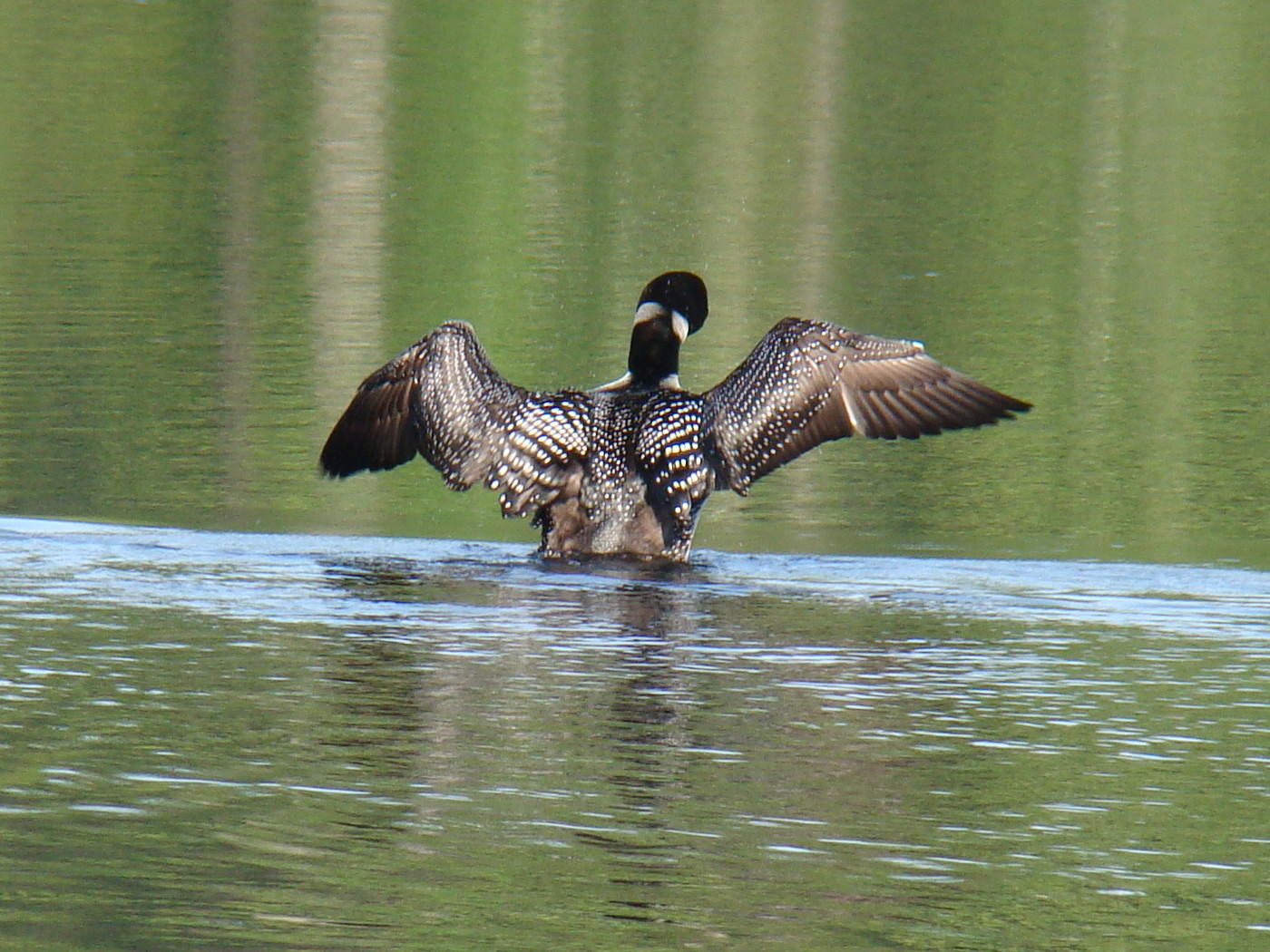
Showing posts with label Colorado. Show all posts

Sunday, June 13, 2021

June 13, 2021: Colorado Colors

I was away last week visiting family in Steamboat Springs, exploring the trails, lakes, flora and fauna of northwestern Colorado, marveling over the similarities and differences from New Hampshire.  Though the climate there is semi-arid and the elevation even in town is higher than the summit of Mount Washington, many of the same wildflowers we have in New Hampshire were blooming there, including lupine and columbine.  Then there are the different plants, some of which fascinate me by their ability to bloom with incredible beauty in such harsh environments.  My favorite on this trip's journeys was the glacier lily.

Glacier Lily (Erythronium Grandiflorum)

These flowers grow in the subalpine habitat and were first recorded in Idaho on June 16, 1806 by Meriwether Lewis during the Lewis and Clark expedition.  

Large fields of these delicate flowers were blooming at elevations of 10,000 feet in soil that was already extremely dry even though snow had only recently receded from their location and in fact was still present right beside them.

A field of glacier lilies - note the snow bank at the right side of the picture.

The sun is so intense and the air so dry that much of the snow sublimates before it can soak into the ground, and what does melt quickly evaporates, sometimes leaving interesting natural snow sculptures.  

A snow bridge across the trail.

It seems wherever I go I find myself drawn to a lake, even if I have to walk 13 miles to find it.  Long Lake is found at a elevation of 10,039' near the continental divide in the Routt National Forest in northwestern Colorado.  
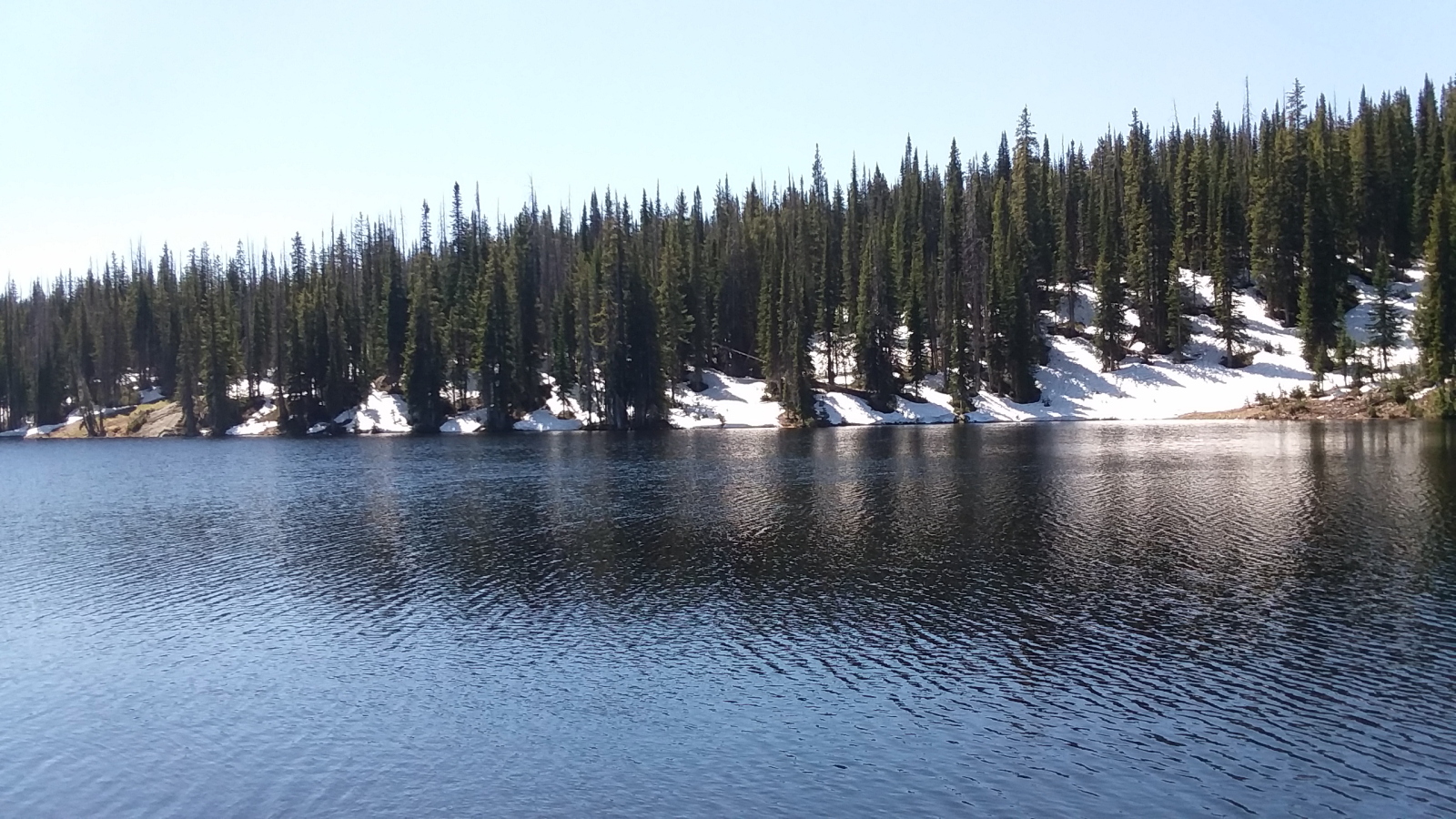
Long Lake, Routt County, Colorado.

There was not much human activity here but people do hike all the way up to Long Lake to fish.  The lake, full from snow melt, was pouring out water into Fish Creek which was gushing and sending torrents over the falls farther down stream.

Lower Fish Creek Falls, only a few miles from its confluence with the Yampa River.

Full streams mean being creative at river crossings as they're deep and wide, requiring determination to forge ahead and attain your destination.  

A tight wire act across the upper reaches of Fish Creek.

It sure helps when you have an expert local guide!


Even though we were away from New Hampshire I was kept up to date on the loon activity here at Lake Wicwas as our faithful loon watchers made regular check-ins with the loon nest.  Dave Thorpe captured this great moment on the nest.

This loon may look upset, but it's just trying to cool off.  A nervous loon holds its head down, not up.

On another day Dave was able to get a picture which verified one of the pair is the banded male.  

That's our male on nest duty.  Photo by Dave Thorpe.

Just a reminder, these photos were taken from a far distance with a 400mm telephoto lens and then greatly enlarged.  Dave also got a glimpse of what may have been a green band which would indicate the original banded pair had rejoined after a tryst with the banded female from Lake Pemigewasset.  Perhaps that was the outcome from the lengthy loon battles we observed the prior week.  It might also explain why the other nest was abandoned:  the nest in that location was being built by the male when it was with the Pemi female.  Oh, the complicated, convoluted love life of loons.

At this point we're nearing the halfway point of incubation, and so far so good.  It's helpful that the temperature has moderated and the lake level has been stable - the Meredith Water Department has been proactive in managing the dam for us this year - many thanks to them.  

I'll bet they're relieved they don't have to hike up to 10,000 feet to manage the dam - yes Long Lake, even way up there, is controlled by a dam.

A couple of glacier lilies bloom in arid soil near the shore of Long Lake.


Sunday, October 21, 2018

October 21, 2018: October Ice

First ice of the season
Yes, that is ice on Lake Wicwas.  Only in one protected cove, but nonetheless, on October 19th, it's the earliest I remember seeing ice on the lake.  The prior earliest date in my records was on October 28th, back in 2011, and that occurred where I usually see first ice, in a marsh beside Sheep Island.  This year it formed on a night when the temperature dropped to 28 degrees and there was a light frost with a few ice crystals forming on low-growing leaves.

There should be more opportunities to see these form over the next few weeks.

We took a trip to Colorado last week and there was a lot more ice and snow out there, at least at elevations above 10,000 feet.
Colorado's Front Range

Not to be outdone, New Hampshire's Mount Washington, almost 4000 feet lower in elevation, also had some snow last week, but they weren't skiing there like they were at 12,000 foot high Loveland Pass in Colorado.
Ski tracks in Loveland Pass

At lower elevation we found a New England Thanksgiving favorite.
Two of a large flock of turkeys at Castlewood Canyon State Park

It seems turkeys are just a plentiful in Colorado as they have become here over the last 20 years.

On a couple of hikes in Steamboat Springs I found larger wildlife up at snow level, and signs of  even larger wildlife down below the snow line.
Mule deer on Mount Werner
Bear scat on Emerald Mountain
That's one large pile of bear scat - larger than those I find in the Lakes Region.

It was nice to find some good color in the trees when we returned, though the peak color is moving south now.
Still color as of today (from the boat ramp)


I was out on the lake yesterday; it was pretty, but rather windy so I didn't see any bird action, but I did hear a loon on the lake earlier in the week.

If you drove up to the lakes from the south this weekend you probably had a beautiful trip.  I'm still planning on another hike or two to take advantage of the fall weather and the increased viewing through bare branches on the trees.  Maybe a few more paddles on the lake too - we'll see what the weather brings us. 

Sunday, August 5, 2012

August 5, 2012

No posting last week, as we were in Colorado for a week of visiting family and touring the Rocky Mountains.  We had a rejuvenating vacation that included tubing the Yampa River, inspiring music at Strings, and magnificent scenery while hiking and biking in the mountains. It's great to have local hosts and tour guides!

Although much of the environment is similar, everything is bigger in the Rockies.  We saw larger versions of woodchuck (yellow-bellied marmots) and deer (prong-horn), and of course, mountains and valleys which dwarf New England.  Unfortunately, the forest fires are bigger also, and we drove through miles of scorched landscape between Fort Collins and Steamboat Springs.  Here's a sample of a lake in Colorado - at about 11,000 feet!  No fires here.  And yes, that's snow still up in the mountains.

Little Causeway Lake, Routt National Forest
Back at Lake Wicwas we were happy to find the find the forest green and lush, as some rain had fallen while we were away.  (Drought is something else the west is having in a big way right now.)  On the kayak, looking to see what new plants are blooming around the lake I found buttonbush, ripe huckleberries, and a couple of white flowers I hadn't identified before.  In this spot on the edge of an island, all four of there were growing together.


With a little research I was able to identify the plant with the rather unusual flower - it is a Turtlehead.  I'd never heard of this plant, but once you know what it's called, it's obvious, and not a name I'll likely forget.

White Turtlehead (Chelone glabra)
Here's an interesting claim about turtlehead:  according to wikipedia, the Abenaki used it as method of birth control (no guarantee made by the author).

The buttonbush name is also pretty descriptive:
Buttonbush (Cephalanthus)
The exciting news is that the newest loon on the lake has survived its most precarious period, having it's two-week birthday just today. 
Two weeks old

Its parents are taking good care of it, keeping a close eye on it, although they do both dive at the same time, leaving it alone and vulnerable on the surface.

The little guy is starting to dive already, and the parents are teaching it to fish.  Here, all three are looking for lunch.

We watched one adult catch a fish and then play with it for a long time until it was tired out, and then let the chick catch it for itself.


The chick is also starting to spread its little wings.


It's hard to believe they will be strong enough for it to fly away in three or four months.  Let's hope for a late ice-in this year since it got such a late start.

There was also a second pair of loons on the lake this weekend, travelling around together, though keeping well away from the breeding pair.
 Their wings are just a bit larger.

There was a large bass tournament on the lake this weekend, with lot of big, high-tech bass boats out competing with the loons for fish.  But I liked this different approach to fishing!
Did you happen notice the sign of fall in the background....?