|
| Showy tick-trefoil (Desmodium canadense) |
By returning to it over time I figured it out, and I also got to see its flowers develop into seeds which then also answered another mystery for me. Have you ever come back from a walk with these little treasures hanging onto your clothes?

I have, sometimes dozens of them, and they're a pain to get off. But as the tick-trefoil matured I recognized these clingy hitchhikers as the seeds from that plant.
 |
| Those pretty flowers turn into these clever seed pods |
The seed pods have tiny hooks on their exterior - nature's velcro - which grab onto anything and are surprisingly difficult to remove.
 |
| Seeds with a very effective method of distributing themselves far and wide. |
They look wet but they aren't. Showy tick-trefoil is a good host plant for hummingbirds, butterflies and bumblebees [Ref: University of Texas] as well as a food source for quail, pheasant, turkey, other ground birds, and deer. [Ref: USDA Natural Resources Conservation Service]
In this time of summer abundance lots of plants are feeding the animals including the black bear that made a visit to the cherry trees this week. There was a good set of fruit on the trees before he arrived.
 |
| A good cherry crop looks like a drive-through snack bar to a bear. |
But after his visit they were not only cleaned out, but knocked over and broken.
 |
| This concession stand will have to rebuild for next summer. |
Bears are not very careful eaters - they're happy to just bend over a branch and sit on the ground gulping down the fruit. Plants such as cherry and blueberry have adapted to this abuse, and they put out new growth every year to replace branches snapped off by bears or harsh winter weather.
A good indication that this was a large bear is the big pile of scat I found just down the trail.
 |
| There are plenty of cherry pits in this pile of evidence. |
Another good food source starting to mature now is the mushroom crop.
 |
| A beautiful, and perhaps edible, Chicken Mushroom (Laetiporus sulphureus) also called sulpher shelf. |
I saw this large Chicken Mushroom at the base of an oak tree. I'm told it's good eating, but I don't partake of wild mushrooms, and don't recommend it for anyone who isn't a learned expert on the subject. David Fisher's website AmericanMushrooms.com explains why: This fungus can be edible or poisonous depending upon the type of tree on which it is growing. [Ref: American Mushrooms] I'll stick with blueberries.
I took a paddle one fall-like day this week and saw an osprey soaring high above the lake.

And I can report that the loon family is doing fine. This is the longest we have had a chick - let alone two - survive since 2014 when a single chick was successfully fledged. I know I shouldn't say it, but I'm starting to think these guys will make it!
 |
| Harley or Davidson with mom or dad, and nearly as large. |
Have a great Labor Day, and keep an eye on your friends and family in the path of Dorian!
 |
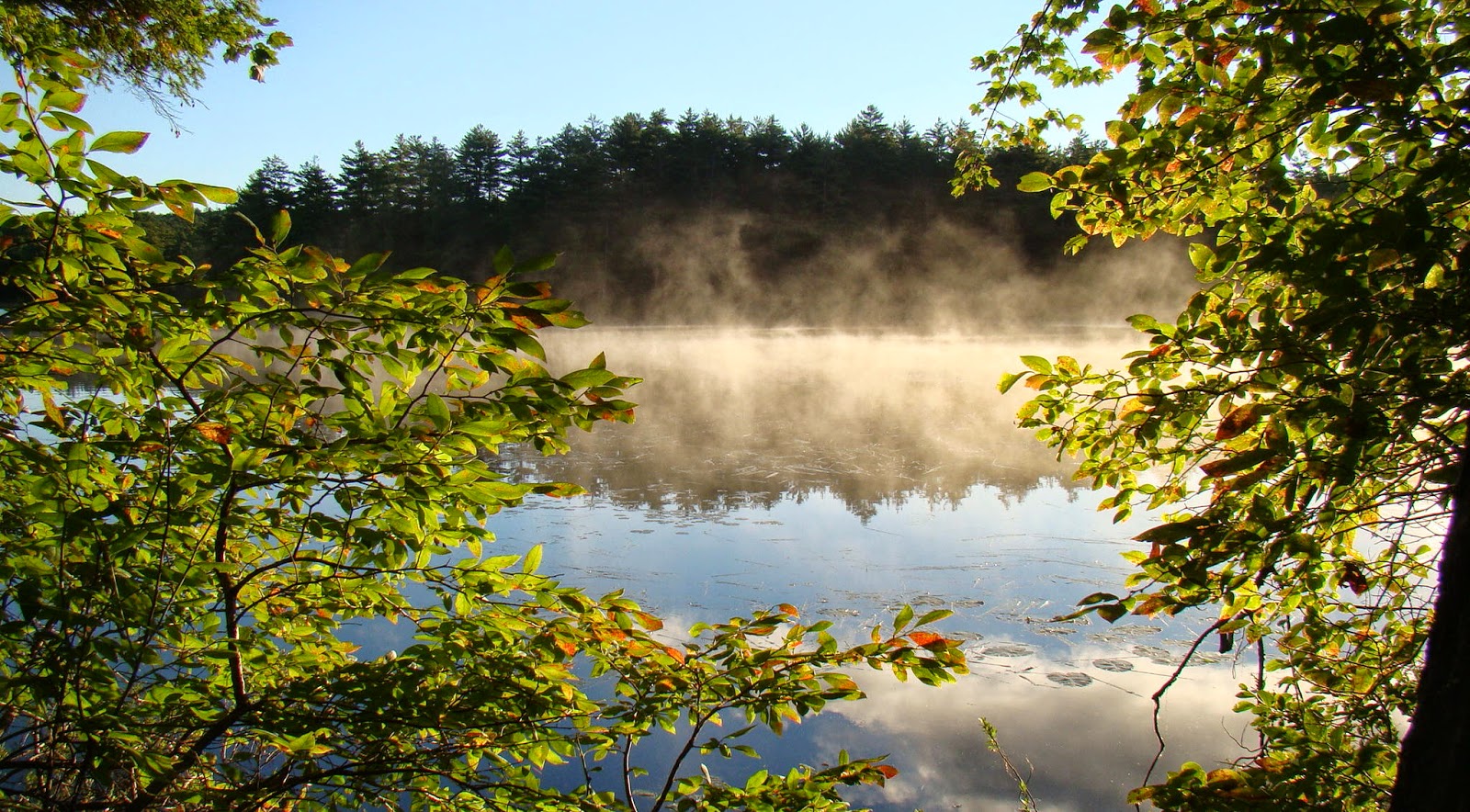
| The sun is rising later on these late summer days. |